 listicle
5 Best No-Slip Rash Guards for Women
Table of Contents
- How We Evaluated These No-Slip Rash Guards
- Quick Comparison: 5 Best No-Slip Rash Guards for Women
- 1. CYBORG WEAR Women's Rash Guard: Best Overall No-Slip Fit
- 2. CYBORG WEAR Women's Rash Guard (All-Over Print): Best for High-Intensity Training
- 3. Best Moisture Wicking Rash Guards for Women: What to Look For
- 4. How to Choose the Right Size Rash Guard
- 5. Rash Guard Care and Maintenance Tips
- Common Mistakes That Cause Rash Guards to Slip
- Frequently Asked Questions
Last Updated: October 2, 2026
How We Evaluated These No-Slip Rash Guards
A no-slip rash guard stays put because of its construction, not its marketing.

The five criteria that separate a secure fit from a slipping one are straightforward:
- Hem retention: a longer body and a fitted cut keep the hem anchored over the hips.
- Seam construction: flatlock seams and coverstitch sit flush, which reduces chafing and drag.
- Fabric recovery: four-way stretch that snaps back holds its shape instead of stretching out.
- Fit accuracy: a true fitted design beats sizing up to compensate for a loose cut.
- Print durability: dye that survives repeated washing keeps the garment looking new.
Most guides rank rash guards by color and price. A rash guard that slides up during a burpee or a paddle-out fails at its only real job.
Quick Comparison: 5 Best No-Slip Rash Guards for Women

| Pick | Best For | Fabric | Key Anti-Slip Feature | Price |
|---|---|---|---|---|
| CYBORG WEAR Women's Rash Guard | Best overall fit | 82% polyester, 18% spandex | Longer body, flat ergonomic seams | $44.50 |
| CYBORG WEAR All-Over Print Rash Guard | High-intensity training | 82% polyester, 18% spandex | Fitted design, coverstitch | $48.50 |
| Sweat-heavy sessions | Four-way stretch | Recovers on both grains | Varies | |
| Hard-to-fit frames | Four-way stretch | True fitted cut, XS-3XL | Varies | |
| Long-term wear | Four-way stretch | Flatlock seams, print-safe dye | Varies |
1. CYBORG WEAR Women's Rash Guard: Best Overall No-Slip Fit
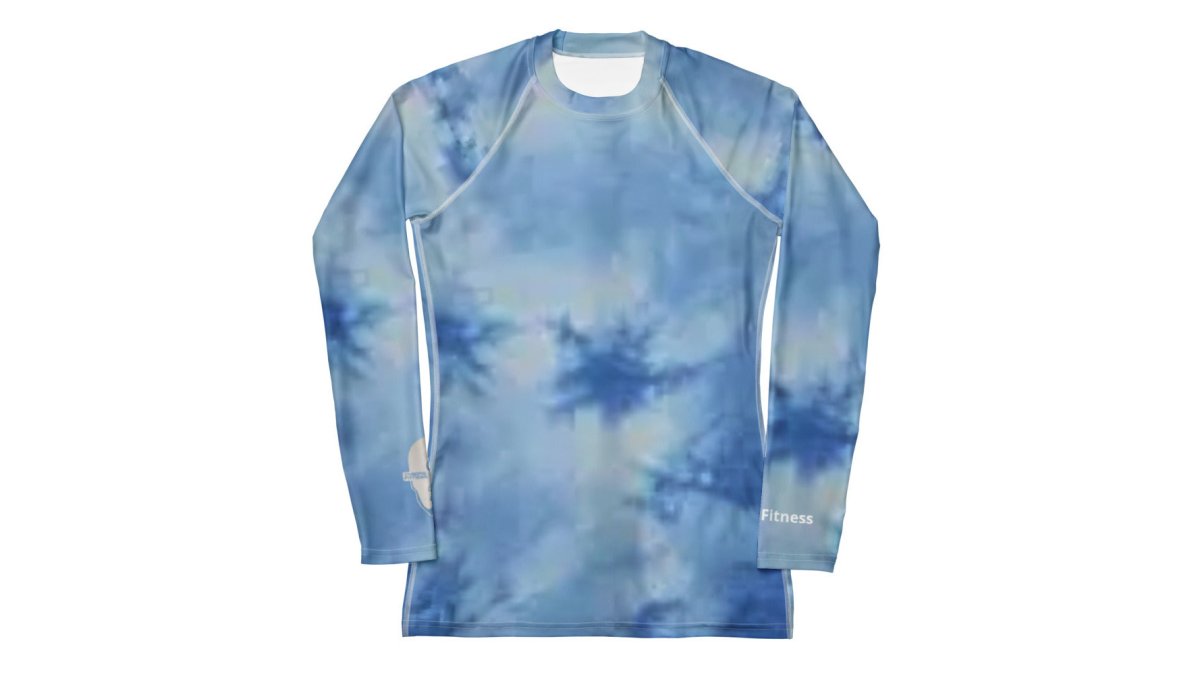
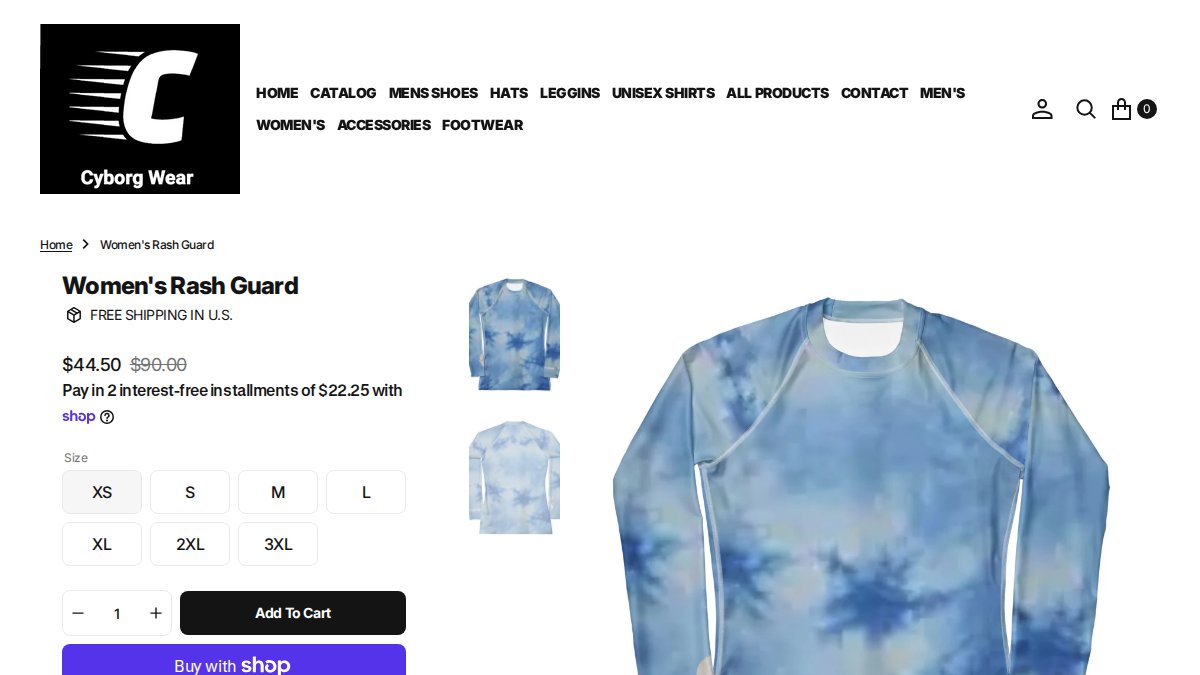
The CYBORG WEAR Women's Rash Guard is a great option because its construction helps prevent slipping. The longer body and fitted design keep the hem anchored, while flat ergonomic seams sit flush against the skin.
The fabric does the rest. It is 82% polyester and 18% spandex, a blend that stretches and recovers on both the cross and lengthwise grains, the recovery that stops a rash guard from bagging out after an hour of wear. It also carries UPF 50+ protection against sun and wind.
At $44.50, it offers strong construction features.
Why the Hem and Seams Keep It in Place
Flatseam and coverstitch construction removes the raised ridges that catch on skin and mats, so the fabric glides instead of grabbing and rolling. The longer body adds coverage past the waist, giving the hem more surface to grip, and four-way stretch that recovers on both grains holds the shape through repeated movement.
2. CYBORG WEAR Women's Rash Guard (All-Over Print): Best for High-Intensity Training
The CYBORG WEAR Women's Rash Guard with all-over print uses a fitted design and coverstitch construction, with a print that is designed to stay vibrant.
This version runs $48.50. The print covers the full garment, so there is no blank panel to fade unevenly, and the same four-way stretch, UPF 50+ protection, and flat ergonomic seams carry over.
3. Best Moisture Wicking Rash Guards for Women: What to Look For
Start with fabric weight. A mid-range knit around 6.78 oz/yd² (230 g/m²) balances breathability with the structural body needed to hold a fitted cut. Lighter knits stretch out under load and creep; heavier knits trap heat and drag the hem down.
How Wicking and Anti-Slip Interact
Moisture-wicking fabric pulls sweat to the surface where it evaporates.
What to Look For in a No-Slip Wicking Rash Guard
- Four-way stretch with real recovery. The fabric should stretch and snap back on both the cross and lengthwise grains. If it stays stretched after you pull it, it will slip.
- A knit weight in the 6.78 oz/yd² (230 g/m²) range. Light enough to breathe, heavy enough to hold its cut.
- Flatlock or coverstitch seams. Raised seams catch on skin and mats, which causes the fabric to roll and ride up.
- A fitted cut, not a compression cut. Compression fabric can restrict breathing during long sessions; a true fitted cut grips without squeezing.
- UPF 50+ protection. Sun protection and moisture management are separate features, and a good rash guard carries both.
Breathability, Stretch, and the Trade-Offs
Stretch matters for fit, but too much stretch without recovery is worse than too little, a fabric that stretches easily but does not recover will bag out at the waist and hem within an hour. Look for roughly 18% spandex: enough for four-way stretch and recovery without turning the garment into a compression piece.
Why This Matters for No-Slip Performance
A rash guard that wicks poorly becomes heavy with sweat, and a heavy rash guard pulls its own hem down. The fix is not a tighter cut but a fabric that manages moisture, recovers its shape, and holds a fitted silhouette through a full session.
4. How to Choose the Right Size Rash Guard
Choosing the right size rash guard comes down to measuring your chest, waist, and hips, then matching those numbers to the brand's chart rather than your usual clothing size. A fitted rash guard should feel snug without restricting movement.
CYBORG WEAR's women's sizing runs from XS to 3XL, with chest measurements from 34 ⅝ inches at XS to 50 ⅜ inches at 3XL, plus waist and hip columns.
How Cut Construction Affects Slippage
Raglan sleeves run the seam from collar to underarm in a diagonal line, giving more room through the shoulder and a fuller range of motion, a good match for broader shoulders or a fuller chest. The trade-off: raglan seams can shift under repeated overhead movement, so the hem needs a longer body to compensate.
Body-Type Specific Recommendations
- Straight through the torso (chest, waist, and hips within a few inches): size to your chest measurement. A set-in sleeve cut with a fitted waist will hold best. Let the four-way stretch handle minor gaps.
- Fuller hips than chest: size to your hip measurement so the hem does not ride up over the hip bone. Look for a longer body and a hem that sits below the widest part of the hip. Raglan sleeves can help here because they do not pull the torso upward when you reach overhead.
- Fuller chest than hips: size to your chest measurement and expect a closer fit through the waist. A set-in sleeve cut with a slightly longer body keeps the hem anchored without pulling across the chest.
- Athletic build with broad shoulders: raglan sleeves reduce binding and let the shoulder move freely. Pair with a fitted waist so the torso does not twist.
- Between two sizes: size down for a tighter anti-slip fit, up if you want room to layer. If slipping is your main complaint, size down. A snugger fit grips better than a loose one.
The Measurement Check Most People Skip
- Chest at the fullest point, tape level under the arms.
- Natural waist at the narrowest point, usually just above the navel.
- Hips at the widest point, usually 7 to 9 inches below the natural waist.
5. Rash Guard Care and Maintenance Tips
Rash guard care comes down to three habits: cold water, air drying, and no fabric softener. These keep the four-way stretch intact and stop the print from fading.
- Rinse after saltwater or chlorine exposure to protect the fibers.
- Machine wash cold on a gentle cycle, or hand wash.
- Hang to air dry instead of using a dryer, which breaks down spandex.
- Turn printed garments inside out before washing.
- Skip bleach, softener, and high-heat ironing.
Common Mistakes That Cause Rash Guards to Slip
- Sizing up for comfort. A loose rash guard has nothing to grip. Fitted is the point.
- Ignoring recovery. Fabric that has stopped snapping back cannot hold its shape.
- Using fabric softener. It coats the fibers and kills moisture-wicking performance.
- Drying on high heat. Heat breaks down spandex and permanently loosens the fit.
The fix for all four is the same: buy a fitted, four-way stretch rash guard, then treat it like performance gear, not a cotton tee.
Frequently Asked Questions
How do I keep my rash guard from riding up?
Riding up usually comes from a loose hem or a fabric that stretches out under sweat. Look for a longer body cut, flat ergonomic seams, and four-way stretch fabric that recovers instead of sagging. A fitted design that follows your torso keeps the hem anchored better than a relaxed cut. If your current rash guard still rides up, check the size first: a band that sits too low on the hips will slide no matter how tight the fabric is.
What features make a rash guard 'no-slip'?
Three construction details do most of the work: flatlock or flat seams that lie flush against the skin, a longer body that stays tucked past the waistband, and fabric with enough spandex to snap back after stretching. UPF 50+ protection and moisture-wicking properties matter for comfort, but they do not stop movement on their own. Check the seam type and body length before you check the print.
Do rash guards need to be tight to stay in place?
They need to be fitted, not tight. A rash guard should sit close to the body with no loose fabric bunching at the waist or under the arms, but you should still be able to raise your arms and rotate your torso without the hem pulling up. If it leaves deep marks or restricts your breathing, it is too small and will actually shift more as you move. Use the chest, waist, and hip measurements in the size guide rather than guessing from your usual top size.
How should a women's rash guard fit for high-intensity training?
For high-intensity training, the rash guard should stay flush through overhead presses, rows, and burpees. Check that the sleeves are long enough to cover the wrist without riding, the body reaches past the waistband, and the seams sit flat so they do not chafe during repeated movement. Try a few test movements before your first session to confirm nothing pulls or twists.