 ultimate-guide
Best Fabrics for High Intensity Athletic Wear
Table of Contents
- Why Fabric Matters for High-Intensity Workouts
- Polyester vs. Nylon: Performance Comparison
- The Role of Spandex and Elastane in Stretch
- Moisture-Wicking Fabric Technology Explained
- Synthetic vs Natural Fibers for Exercise
- Durability, Shape Retention, and Microplastic Shedding
- How to Care for Performance Athletic Wear
- Choosing the Right Fabric for Your Sport
- Frequently Asked Questions
Last Updated: October 2, 2026
Why Fabric Matters for High-Intensity Workouts
When you're pushing your body to its limit, fabric becomes the difference between comfort and distraction. The best fabrics for high intensity athletic wear do more than just look good, they actively support your performance by managing sweat, reducing friction, and maintaining their shape through repeated intense movement.

The right fabric choice directly impacts how your body regulates temperature and how long your gear lasts. Synthetic fibers have become the industry standard for high-intensity workouts because they excel at moisture-wicking and durability in ways natural fibers simply cannot match.
Polyester vs. Nylon: Performance Comparison
Polyester dominates high-intensity athletic wear for a straightforward reason: it's engineered specifically for sweat management and durability.
Nylon, by contrast, absorbs moisture more readily. While nylon offers excellent durability and a soft hand-feel, it retains sweat longer against your skin.
The durability comparison also favors polyester for intense workouts. Polyester maintains its shape and color better through repeated washing and high-friction movement.
| Characteristic | Polyester | Nylon |
|---|---|---|
| Moisture-wicking | Excellent (hydrophobic) | Good (absorbs moisture) |
| Evaporation rate | Fast | Moderate |
| Shape retention | Excellent | Good |
| Durability under friction | High | Moderate |
| Color fastness | Excellent | Good |
| Best for | High-intensity workouts | Moderate activity, comfort |
For CYBORG WEAR's Men's athletic t-shirt, the choice was clear: 92% polyester with 8% spandex delivers the moisture management and durability that serious athletes demand during vigorous training sessions.

The Role of Spandex and Elastane in Stretch
Spandex (brand name) and elastane (generic name) are the same synthetic elastic fiber that enables four-way stretch in athletic wear. This is critical for high-intensity movement where your body changes shape constantly.
Most high-performance athletic wear uses 8-20% spandex. The sweet spot for intense workouts is 15-18%, which balances stretch, breathability, and durability.
Higher-spandex content maintains compression and fit longer through repeated washing. CYBORG WEAR's Sports bra uses 18% spandex to maintain support and shape retention through intensive training.
Moisture-Wicking Fabric Technology Explained
Moisture-wicking fabrics use hydrophobic synthetic fibers that actively push moisture away from your skin toward the outer surface, where it can evaporate.
Polyester's fiber structure creates microscopic channels that pull moisture along the fabric's surface through capillary action. Spandex enhances this effect by creating additional pathways for moisture movement.
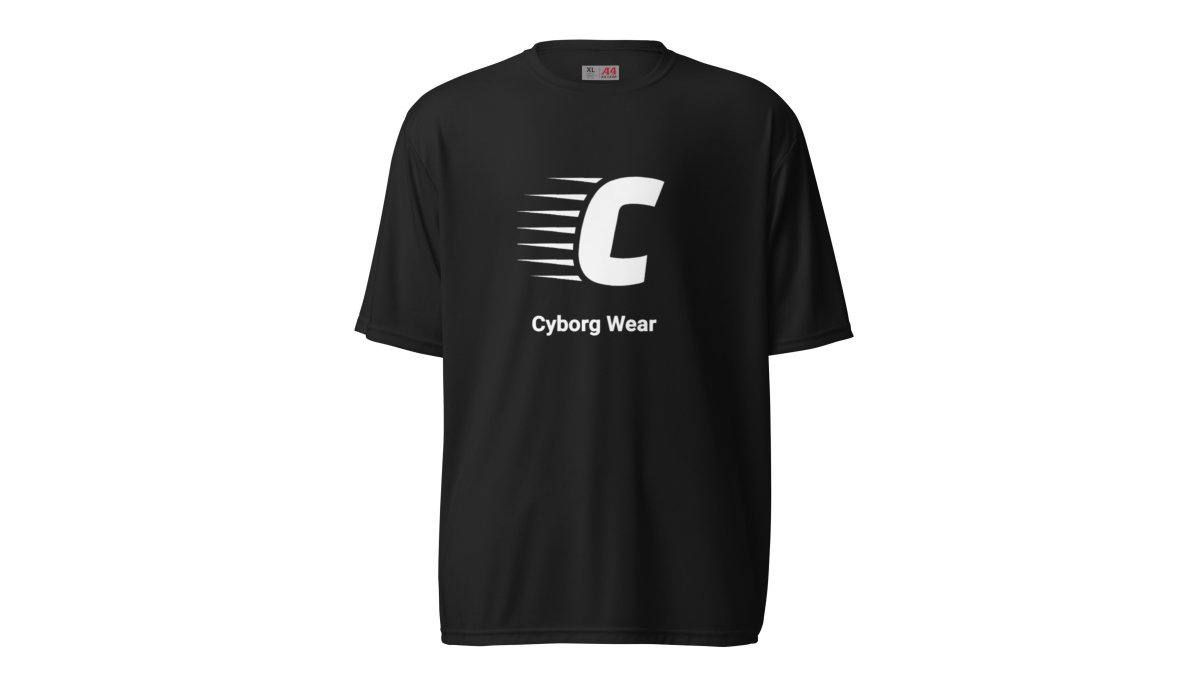
Lighter-weight technical knits (around 4 oz/yd²) wick moisture faster, while heavier fabrics (6-7 oz/yd²) provide better durability for high-impact activities. The Unisex performance crew neck t-shirt uses 100% polyester at 4 oz/yd² to maximize evaporation during intense activity.

Antimicrobial treatments prevent bacteria growth in damp environments, reducing odor buildup during extended training sessions.
Synthetic vs Natural Fibers for Exercise
Cotton absorbs sweat rather than wicking it, staying wet against your skin and creating a heavy, cold sensation that increases chafing risk during high-intensity workouts.
Merino wool and bamboo fiber absorb moisture rather than wick it, making them unsuitable for high-output activities where rapid evaporation is essential.
Synthetic fibers were engineered to solve the moisture problem natural fibers cannot overcome.
Natural fibers weaken when wet and break down under mechanical stress, while synthetic fibers become more durable through heat and friction exposure.
Durability, Shape Retention, and Microplastic Shedding
High-intensity workouts stress fabric through repeated friction, mechanical stress, and thermal cycling. The type of synthetic and its construction matters enormously for durability.
Polyester with proper spandex content (15-18%) maintains its shape through 50+ wash cycles when cared for properly. Lower-spandex blends start showing visible sagging around 20-30 washes. The difference compounds over time, gear that holds its shape retains its performance characteristics, while stretched-out fabric loses compression and support. CYBORG WEAR's Women's Rash Guard uses 82% polyester with 18% spandex specifically because this ratio maintains fitted performance through hundreds of wear cycles.
Microplastic shedding has emerged as a legitimate concern for synthetic athletic wear. Synthetic fabrics shed microscopic fibers during washing, particularly in the first 5-10 washes.
Several strategies reduce microplastic shedding without sacrificing performance. Washing in cold water with shorter cycles reduces fiber release compared to hot, extended washes (Microfiber release from real soiled consumer laundry and the impact of fabric care...). Using a microfiber-catching laundry bag captures many shed fibers before they enter wastewater. Some manufacturers are developing fabric treatments and construction methods that reduce shedding. CYBORG WEAR's All-over print men's rash guard uses recycled polyester certified to Global Recycled Standard (GRS), which addresses sustainability concerns while maintaining the performance characteristics essential for high-intensity training.
Unisex performance crew neck t-shirt →

The tension between performance and environmental impact is real. Natural fibers avoid microplastic shedding but fail at moisture-wicking and durability.
How to Care for Performance Athletic Wear
Proper care extends the life of your athletic gear and maintains its performance characteristics. The first rule: wash in cold water.
Use shorter wash cycles (30-40 minutes) rather than extended cycles.
Wash inside-out to reduce pilling and surface friction.
For gear with prints or special finishes, follow manufacturer guidance carefully.
Store clean, dry gear in a cool environment away from direct sunlight.
| Care Step | Correct Method | Why It Matters |
|---|---|---|
| Water temperature | Cold (60-70°F) | Preserves fiber elasticity, reduces shedding |
| Wash cycle | Gentle or athletic (30-40 min) | Reduces mechanical stress on fibers |
| Drying | Air dry only | Protects spandex and synthetic structure |
| Detergent | Mild, technical-specific | Prevents fiber damage and coating |
| Fabric softener | Avoid completely | Reduces moisture-wicking capability |
| Storage | Cool, dry, dark location | Prevents UV degradation and mildew |
Choosing the Right Fabric for Your Sport
Different high-intensity sports have different fabric requirements, though the core principles remain consistent.
For HIIT and intense gym training, polyester-dominant blends (85-92% polyester with 8-15% spandex) deliver optimal performance. The high polyester content maximizes moisture-wicking, while the spandex provides the four-way stretch needed for dynamic movement. Weight around 4-5 oz/yd² keeps things light and breathable. CYBORG WEAR's Men's athletic t-shirt and Sports bra both use this formula because it's proven across thousands of intense workouts.
For sports involving water exposure, swimming, water aerobics, beach training, chlorine and saltwater resistance becomes critical. Recycled polyester blends hold up better than virgin polyester under chemical exposure. CYBORG WEAR's All-over print men's rash guard uses 81% recycled polyester with 19% spandex (Lycra) specifically for water-resistant performance and durability in challenging environments.
For sports with high friction and impact, running, jumping, combat training, fabric weight matters more. Heavier technical knits (6-7 oz/yd²) provide better support and reduce chafing. The trade-off is slightly reduced breathability, but the friction reduction and durability gains justify it for these specific activities. Biker Shorts use this heavier construction (6.78 oz/yd²) because the high-friction nature of intense leg training demands superior support and durability.
For transitional wear, gym to casual outings, you need fabric that performs during workouts but looks intentional afterward. This is where CYBORG WEAR's design philosophy shines. The Unisex track pants use lightweight polyester (2.21 oz/yd²) with water-resistant treatment, delivering performance during training while maintaining a clean aesthetic for casual wear.
The key principle across all sports: match fabric weight, fiber content, and construction to the specific demands of your activity. Light, breathable synthetics for high-sweat activities.
Choosing the right fabric for high-intensity athletic wear isn't about following trends, it's about understanding how fiber composition, weight, and construction directly impact your performance and comfort during demanding workouts.
CYBORG WEAR's collection of performance athletic wear, from the Unisex performance crew neck t-shirt designed for maximum breathability, applies these principles across every piece. When you're selecting gear for serious training, fabric science should drive your decision. SHOP NOW and experience the difference that engineered performance fabrics make during your most intense workouts.
Frequently Asked Questions
Do moisture-wicking shirts actually work?
Yes. Moisture-wicking fabrics pull sweat away from your skin and move it to the outer surface where it evaporates faster than cotton. This keeps you drier, cooler, and more comfortable during intense exercise. Synthetic blends with polyester and spandex are engineered specifically for this function, making them far more effective than natural fibers for high-intensity workouts.
What's the difference between moisture-wicking fabric technology and regular cotton?
Cotton absorbs sweat and holds it against your skin, making you feel wet and cold. Moisture-wicking fabrics like polyester-spandex blends have hydrophobic properties that repel moisture and channel sweat away from your body. During HIIT or intense training, this difference directly impacts performance, comfort, and how quickly you dry after your workout.
Why should you avoid cotton for high-intensity exercise?
Cotton retains moisture and takes a long time to dry, leaving you feeling heavy and uncomfortable during sweat-heavy workouts. It also loses elasticity when wet, reduces breathability, and can cause chafing. For high-intensity athletic wear, synthetic fibers with four-way stretch and moisture-wicking properties deliver better thermal regulation and performance.
How do synthetic vs natural fibers for exercise compare in durability?
Synthetic fibers like polyester and nylon maintain shape and elasticity through hundreds of washes, resisting pilling and fading. Natural fibers like cotton and merino wool break down faster with intense use and frequent washing. For athletes who work out 5+ days per week, synthetic blends with spandex offer superior durability and shape retention over time.
What features should you look for in high-intensity workout tops?
Prioritize four-way stretch, moisture-wicking properties, flat or flatlock seams to reduce chafing, lightweight fabric, and antimicrobial or odor-resistant treatments. Polyester-spandex blends (82/18 or 92/8 ratios) are industry standard. Look for UPF protection if you train outdoors, and ensure the fit is snug enough to move with you without restriction.
How should you care for performance athletic wear to extend its life?
Wash in cold water inside-out to protect prints and reduce pilling. Use mild detergent and skip fabric softener, which coats fibers and reduces moisture-wicking. Air dry whenever possible, heat damages elastane and spandex. Avoid bleach and rough surfaces that can pull fibers. Proper care keeps four-way stretch fabrics performing and colors vibrant for months of intense training.