 ultimate-guide
Choosing the Best Performance T-Shirt for Lifting
Table of Contents
- Why Your Lifting Shirt Matters More Than You Think
- The Best Fabric for Weightlifting Shirts
- Fit Guide: Athletic Cut vs. Relaxed Fit for Lifters
- Benefits of Compression Shirts for Lifting
- Performance T-Shirt Comparison: CYBORG WEAR Options
- How to Care for Performance Gym Clothing
- Common Mistakes When Buying Lifting Shirts
- Frequently Asked Questions
Last Updated: September 23, 2026
Why Your Lifting Shirt Matters More Than You Think
Choosing the best performance t-shirt for lifting comes down to four variables: fabric content, moisture management, fit, and seam construction. Get them right and the shirt disappears into a hard session; get them wrong and you're tugging at a soaked hem between sets.

The Best Fabric for Weightlifting Shirts
The best fabric for weightlifting shirts is a synthetic blend, typically polyester with a small percentage of spandex or elastane. Synthetic fibers move sweat away from skin, dry quickly, and hold their shape under repeated stretching. Cotton is the wrong choice above light training: it absorbs moisture, stays heavy, and loses its shape once soaked. How the main options compare:
| Fabric | Moisture Handling | Stretch | Durability | Best For |
|---|---|---|---|---|
| 100% polyester | Excellent wicking | Low | High | High-sweat sessions |
| Polyester/spandex blend | Excellent wicking | Four-way stretch | High | Lifting, functional fitness |
| Cotton/polyester blend | Moderate wicking | Low | Moderate | Light training, casual wear |
| 100% cotton | Poor | None | Low when wet | Rest days only |
Polyester vs. Cotton Blends
Pure polyester wins on sweat management and durability: it's hydrophobic, pushing moisture to the surface to evaporate instead of sitting against your skin. Cotton blends sit in the middle, a 50/50 cotton-polyester shirt like the DryBlend® construction handles light sweat and feels softer, but won't match a full synthetic during hypertrophy training or a long powerlifting session. Train hard four or more days a week and go synthetic.
Fit Guide: Athletic Cut vs. Relaxed Fit for Lifters
Athletic cut shirts are tapered through the waist and wider through the chest and shoulders. Relaxed fit shirts hang straighter with more room throughout. Neither is universally better; the right choice depends on your build and how you train.
Body Type Considerations
Most fit advice stops at "size by your shoulders, not your chest." That's the right start, but it doesn't tell you which cut to buy. The useful question is which silhouette matches your build, because a shirt that fits one lifter's frame will bunch, ride, or bind on another's.
Why Fit Changes Your Lift, Not Just Your Look
Fit isn't cosmetic. A shirt that rides up during an overhead press puts fabric between your hands and the bar; one that pulls across the chest during a bench setup changes where the bar path starts; one that bunches at the hips during a deadlift setup catches on your belt line. The test: put the shirt on, reach both arms overhead, then pull your shoulders back into a brace.
Benefits of Compression Shirts for Lifting
Compression shirts for lifting support muscle during heavy efforts, reduce fabric movement against skin, and manage sweat across the torso. They're a different tool from a standard performance tee, not a replacement. The main benefits lifters report:
- Reduced muscle oscillation during high-rep work
- Less chafing because fabric stays in place
- Better thermal regulation when worn as a base layer
- Improved proprioception, or awareness of body position under load
Performance T-Shirt Comparison: CYBORG WEAR Options
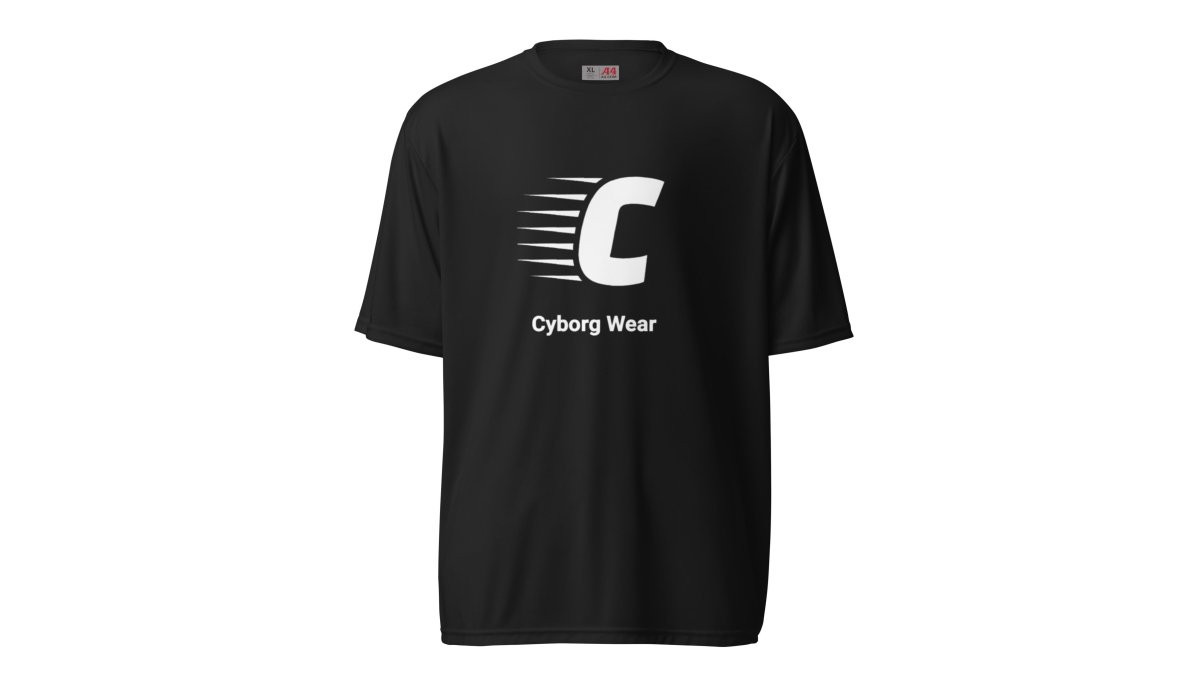
CYBORG WEAR's lineup covers the range from lightweight training tees to mid-weight cotton blends. Each shirt suits a different training context, so the right pick depends on how you train and how much you sweat.
| Shirt | Fabric | Weight | Fit | Price |
|---|---|---|---|---|
| Unisex performance crew neck t-shirt | 100% polyester | 4 oz/yd² | Relaxed | $32.00 |
| Men's athletic t-shirt | 92% polyester, 8% spandex | 4.42 oz/yd² | Comfortable athletic | $44.00 |
| Men's athletic t-shirt (cut-sew) | 92% polyester, 8% spandex | 4.42 oz/yd² | Comfortable athletic | $42.50 |
| Cyber Skull Graphic DryBlend® Performance Tee | 50% cotton, 50% polyester | 5.5 oz/yd² | Classic | $22.50 |
| DryBlend® T-Shirt | 50% cotton, 50% polyester | 5.5 oz/yd² | Modern classic | $25.00 |
| Women's athletic t-shirt | 92% polyester, 8% spandex | 4.42 oz/yd² | Comfortable athletic | $44.00 |
| All-over print men's rash guard | 81% recycled polyester, 19% spandex | 7.52 oz/yd² | Fitted | $46.50 |
| Women's Rash Guard | 82% polyester, 18% spandex | 6.78 oz/yd² | Fitted | $44.50 |
Pricing and Value Breakdown
The Unisex performance crew neck t-shirt at $32.00 is the best value for most lifters: 100% polyester, moisture-wicking, odor-resistant, fade and snag resistant, with UPF44+ protection and reinforced shoulder seams. The Men's athletic t-shirt and Women's athletic t-shirt at $44.00 step up to a four-way stretch sports mesh fabric with overlock and coverstitch construction and UPF 50+ protection; the four-way stretch is what makes the difference during overhead pressing and pulling.
How to Care for Performance Gym Clothing
Performance gym clothing lasts longer when you wash it cold, skip the fabric softener, and air-dry it. Heat and softener both break down the fibers that make synthetic fabric wick sweat and stretch.
A simple care routine that works:
- Turn shirts inside out before washing
- Wash cold on a gentle cycle with like colors
- Skip fabric softener and dryer sheets entirely
- Use a sport-specific detergent if odor lingers
- Hang dry or tumble on low heat
- Wash new printed shirts before first wear to remove any print residue
The Wear Nobody Warns You About: Barbell Knurling
Laundry is the care advice every guide gives you. The damage that actually kills lifting shirts happens on the bar, not in the wash. Barbell knurling is a diamond-pattern cut into the steel to give your hands grip, and that same pattern is abrasive. It contacts your shirt every time you rest a bar on your shoulders for a squat, pull it into your chest for a front squat, or brush it across your torso during a deadlift setup.
What actually slows this down:
- Denser, heavier weaves resist abrasion longer. A mid-weight knit has more material between the knurl and the skin than a thin, open mesh. If you squat or front-rack heavy loads regularly, a denser fabric outlasts a lighter one even though it breathes less.
- Reinforced shoulder seams and a reinforced upper back spread the load instead of letting a single seam take the friction. This is the construction detail to check before you buy, not after the hole appears.
- Rotate your shirts. Abrasion is cumulative at the same contact point. Rotating three or four shirts spreads the wear and roughly triples the calendar life of each one.
- Don't stretch a worn shirt back into service. Once the fabric at the contact point has thinned, it fails fast under load. Retire it to light training before it tears mid-set.
Matching Care to Your Training Environment
Where you train changes what your shirt needs. A climate-controlled commercial gym keeps sweat and odor manageable with a standard cold-wash routine. A cold garage gym changes the equation: you'll likely layer, and the base layer takes friction from both the bar and the outer layer. In colder spaces, treat the performance tee as a base layer and wash it after every session, odor-causing bacteria multiply faster in fabric that stays damp and cool against the skin.
Common Mistakes When Buying Lifting Shirts
The most common mistake is buying a shirt for looks instead of for the training it will actually do. A shirt that works for a casual gym session often fails during a heavy squat day.
Other mistakes lifters make:
- Sizing up for shoulder room. This creates loose fabric that shifts during bench and overhead work. Size by shoulder measurement instead.
- Choosing cotton for high-sweat training. Cotton holds moisture and gets heavy. It's fine for light days, wrong for anything else.
- Ignoring seam construction. Standard seams chafe under repeated friction. Flatlock and coverstitch construction sits flush against skin.
- Overlooking barbell friction. Knurling chews through thin fabric fast. If you regularly rest the bar on your shoulders or chest, choose a denser weave and reinforced shoulder seams.
- Washing with softener. This quietly kills wicking performance, as covered above.
The two specs that matter most for lifting are fabric content (synthetic blend) and seam construction (flatlock or coverstitch). Everything else is secondary.
Frequently Asked Questions
What fabric is best for lifting t-shirts?
Polyester and polyester-spandex blends work best for lifting. They wick moisture, stretch with your movements, and resist odor better than cotton. Look for four-way stretch fabrics like those in CYBORG WEAR's men's athletic t-shirt (92% polyester, 8% spandex) or the unisex performance crew neck (100% premium polyester). Cotton blends like DryBlend (50% cotton, 50% polyester) offer a softer feel but dry slower during heavy sweating.
Should lifting shirts be tight or loose?
It depends on your goal. A fitted or compression-style shirt supports muscles and reduces chafing during high-rep training. A relaxed fit gives more airflow and freedom for powerlifting movements where you need unrestricted range of motion. CYBORG WEAR offers both: the men's athletic t-shirt has a comfortable fitted cut, while the unisex performance crew neck has a relaxed fit. Try both for different training days.
How do I choose a gym shirt that doesn't restrict movement?
Prioritize four-way stretch fabric and flatlock or overlock seams. The CYBORG WEAR men's athletic t-shirt uses sports mesh with four-way stretch and overlock stitching, so it moves with you through bench press, rows, and overhead presses. Avoid shirts with stiff cotton or tight armholes. Also check that shoulder seams are reinforced but not bulky, since that's where most restriction happens during pressing movements.
How often should I replace my performance gym wear?
Replace performance t-shirts every 6 to 12 months if you train 4 or more days per week. Signs it's time: fabric stays damp after washing, permanent odor lingers, or the shirt has lost its stretch and shape. CYBORG WEAR's shirts are fade and snag resistant, which extends usable life, but barbell knurling and repeated washing will eventually degrade any performance fabric.
Picking the right shirt is a small decision that shows up every session. If you're tired of shirts that soak through, shift under the bar, or fall apart after a few months, CYBORG WEAR builds performance tees with the specs that matter: four-way stretch sports mesh fabric, moisture-wicking construction, reinforced shoulder seams, and UPF 50+ protection across the athletic line. Get started with CYBORG WEAR and train in gear that holds up to the work.