 comparison
Ellie vs Evolve Fitwear: Which Has Better Moisture-Wicking?
Last Updated: November 7, 2026
Quick Summary
Neither Ellie nor Evolve Fitwear publishes head-to-head moisture-wicking or wash-durability test data, so any claim that one clearly wins is unverified. Judge both on disclosed construction instead: fiber percentages, fabric weight, knit structure, seam type, and stated treatments. A brand that will not disclose fiber composition should have its moisture-wicking claims treated as marketing.
- Polyester wicks strongly and dries fast, while nylon offers excellent durability but only moderate wicking.
- Lighter knits around 4 to 5 oz/yd² ventilate and dry faster than heavier 6 to 8 oz/yd² knits.
- Flatlock seams reduce chafe and stress, while standard overlock seams fail first at high-stress points.
- Wash both garments cold, inside out, air-dry, and inspect at cycles 5, 10, and 20.
- Skip fabric softener entirely because it coats wicking fibers and makes garments fail moisture-spread tests.
Table of Contents
- Ellie vs Evolve Fitwear: The Fabric Question That Decides It
- How Moisture-Wicking Fabric Actually Works
- Is Nylon Good for Workout Clothes? A Fiber-by-Fiber Check
- Is Polyester Good for Activewear? What the Blends Tell You
- What Makes Activewear Fabric Last: Pilling, Stretch Recovery, and Colorfastness
- The Best Material for a Gym T-Shirt, Ranked by Job
- Where Ellie and Evolve Fitwear Diverge on Sweat and Durability
- Building a Sweat-Ready Kit: What to Check Before You Buy
- Frequently Asked Questions
Ellie vs Evolve Fitwear: The Fabric Question That Decides It
Ellie and Evolve Fitwear both market performance fabric, but neither publishes head-to-head moisture-wicking testing, so the honest answer is that you have to judge them on construction and fiber composition rather than marketing claims.
Here is the uncomfortable truth most comparisons skip: a fabric can wick sweat beautifully on day one and pill apart by month three. Moisture management and durability are separate engineering problems, and a brand can be good at one and weak at the other.
That distinction is the throughline for everything that follows.
How Moisture-Wicking Fabric Actually Works
Moisture-wicking fabric moves liquid sweat from your skin to the outer surface of the garment, where it evaporates faster. The mechanism depends on fiber type, knit structure, and how tightly the fabric holds water.
Hydrophobic fibers like polyester and nylon refuse to absorb water, so sweat travels along the fiber surface instead of soaking in. For a deeper look at which fiber types handle high-sweat training best, see our guide to the best fabrics for high intensity athletic wear.
The woman is American.
Fiber Composition: What Moves Sweat Off Your Skin
Fiber composition decides most of the performance. A blend with a high synthetic share wicks quickly; a high cotton share holds moisture against your skin.
- Polyester: strong wicking, quick-drying, holds odor if untreated
- Nylon: smooth hand feel, good durability, moderate wicking
- Spandex or elastane: provides stretch and recovery, not wicking
The takeaway: blends beat single fibers. A performance fabric with a synthetic base plus a stretch component is the standard formula for a reason.
Breathability and Ventilation in Practice
Breathability is about air moving through the fabric, not just sweat leaving it. Mesh construction, lighter fabric weight, and ventilation panels do more for comfort than any single fiber claim.
A lightweight fabric with open knit structure beats a dense, heavier fabric in hot conditions even when both claim moisture-wicking. This is where product-level specs matter and marketing copy rarely helps.
Is Nylon Good for Workout Clothes? A Fiber-by-Fiber Check
Yes, nylon is good for workout clothes. Nylon offers excellent durability, a smooth skin feel, and solid abrasion resistance, which makes it a strong choice for high-friction training.
Where nylon wins is longevity and hand feel. Where it loses is drying speed and cost.
| Fiber | Wicking | Drying Speed | Durability | Skin Feel |
|---|---|---|---|---|
| Polyester | Strong | Fast | Good | Light, slightly slick |
| Nylon | Moderate | Moderate | Excellent | Smooth, soft |
| Spandex/elastane | None | Fast | Moderate | Stretchy |
| Cotton | Poor | Slow | Moderate | Soft, absorbent |
| Merino wool | Moderate | Slow | Good | Soft, warm |
Nylon blends well with spandex for stretch pieces that need to survive abrasion. If you want a garment that resists pilling and holds shape, nylon content is a point in its favor.
Is Polyester Good for Activewear? What the Blends Tell You
Polyester is good for activewear when it is engineered for it. The fiber wicks moisture away from skin quickly, dries fast, and holds up to repeated wash cycles better than cotton.
Blends solve most polyester weaknesses. Our breakdown of moisture wicking performance t-shirts and their benefits explains how these blends translate into real garments.
Watch out: a high polyester percentage with no mesh structure can feel clammy during intense sessions even though the label says moisture-wicking.
What Makes Activewear Fabric Last: Pilling, Stretch Recovery, and Colorfastness
Durability is the half of this comparison that marketing copy almost never addresses, and it is where the two brands are hardest to separate without testing. Fabric longevity comes down to four measurable behaviors, pilling, stretch recovery, colorfastness, and seam integrity, and each one has a known cause and a known test.
Pilling: Why Some Knits Fuzz and Others Don't
Pilling happens when loose surface fibers rub against each other and ball up. Two things reduce it: tighter, denser knit structures and longer-staple fibers. A loosely knit polyester can pill within a dozen washes; a tightly knit interlock with a spun yarn holds up far longer. Abrasion points, inner thighs, underarm seams, where a bag strap rubs, are where pilling shows first, so inspect those zones on any garment before you commit.
Stretch Recovery: The Spec That Decides Shape Retention
Spandex content and knit tension determine whether a garment springs back or sags at the knees and waist. Higher elastane percentages (roughly 15-25%) recover better but can feel tighter; lower percentages (8-12%) feel softer but lose shape faster under repeated stretch. The test is simple: stretch a cuff or hem to its limit, hold for ten seconds, release, and see whether it returns flush.
Colorfastness: Prints and Dyes Under Repeated Washing
Colorfastness decides whether a print stays vibrant or fades to a washed-out version of itself. Cold water, inside-out washing, and air-drying preserve dye; hot water and dryer heat accelerate fade. Dark solids and high-contrast prints are the most vulnerable, so check the care label before you assume a print will survive a season.
Seam Integrity: The Failure Point Most Buyers Ignore
Seams fail before fabric does. Flatlock seams distribute stress and reduce chafe; standard overlock seams concentrate stress at the stitch line and are the first thing to go at a gusset or side seam. Run a thumb along the seam and look for loose tension or skipped stitches, that is where a garment will split first.
A Repeatable 20-Wash Durability Protocol
Because neither brand publishes wash-test data, the honest comparison is one you run yourself. Buy one piece from each brand in the same category, then:
- Wash both cold, gentle cycle, inside out, with no fabric softener.
- Air-dry both, dryer heat degrades stretch fibers.
- Inspect at cycles 5, 10, and 20 for pilling, seam integrity, stretch recovery, color fade, and shrinkage.
- Score each on a simple 1-5 scale and compare totals.
A common pattern is that nylon-heavy knits resist pilling and abrasion better, while polyester mesh dries faster but can fuzz sooner at high-friction points. Neither result is universal, the wash protocol is what turns a marketing claim into evidence.
For specific tips on keeping prints sharp, read our guide on how to keep workout leggings from fading.
Wash Cycles, Drying Time, and Fabric Care
Care decisions extend fabric life more than most buyers expect. Wash cold, skip the fabric softener, and air-dry when you can.
- Turn garments inside out before washing
- Use cold water and a gentle cycle
- Avoid dryer heat, which degrades stretch fibers
Our guide on how to wash gym clothes to last longer covers the full routine.
The Best Material for a Gym T-Shirt, Ranked by Job
The best material for a gym t-shirt depends on your workout type. For high-sweat training, a polyester-spandex mesh blend wins. For lifting, a slightly heavier blend with nylon adds abrasion resistance. For yoga or low-intensity work, a softer blend prioritizes skin feel.
Ranked by job:
- High-sweat cardio: polyester mesh blend, lightweight, fast-drying
- Strength training: nylon-polyester blend, abrasion resistant
- Yoga and mobility: soft microfiber blend with four-way stretch
- Hot conditions: lightest fabric weight with maximum ventilation
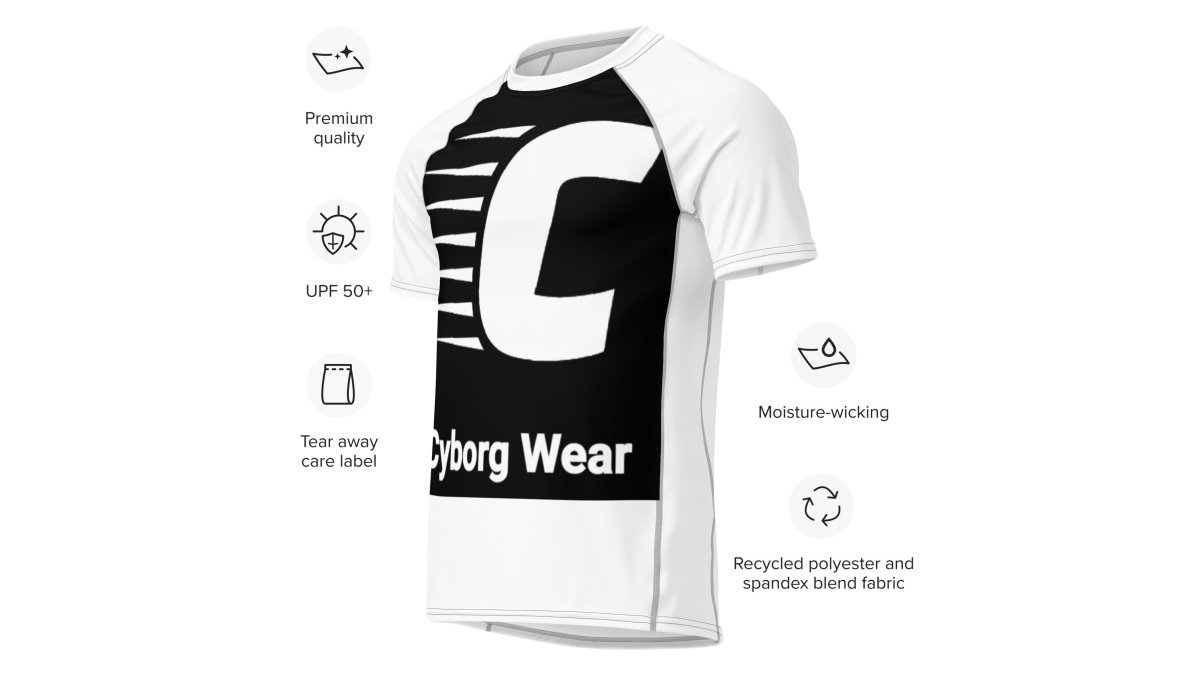
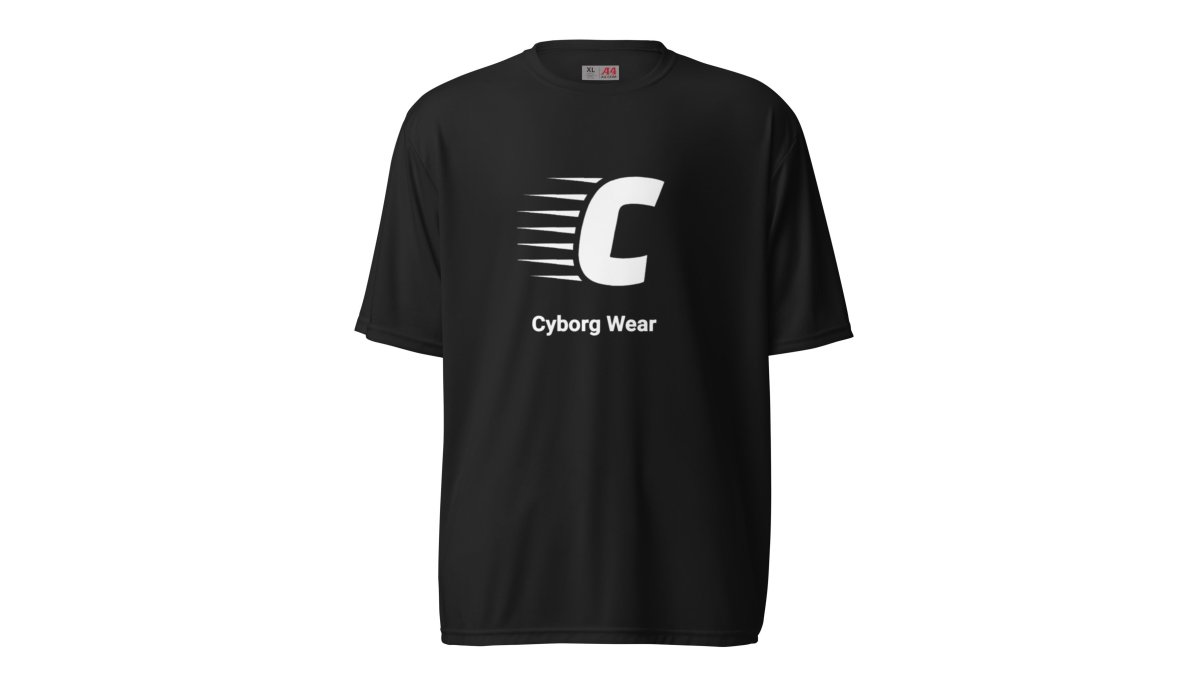
Our women's athletic t-shirt uses a sports mesh fabric with moisture management, 92% polyester and 8% spandex, at 4.42 oz/yd².

Where Ellie and Evolve Fitwear Diverge on Sweat and Durability
Neither Ellie nor Evolve Fitwear publishes repeatable wicking or wash-durability test data, so any claim that one clearly beats the other on fabric performance is unverified. What you can compare is disclosed construction: fiber composition, fabric weight, knit structure, seam type, and stated treatments.
Here is the framework we use at CYBORG WEAR when we read a competitor's spec sheet, applied to both brands.
The Five Specs That Decide the Comparison
- Fiber composition and percentage. A 90% polyester / 10% spandex knit wicks and recovers differently from an 80% nylon / 20% spandex knit, even when both are labeled "moisture-wicking." Ask for the exact percentages, not the fiber names.
- Fabric weight in oz/yd². Lighter knits (roughly 4-5 oz/yd²) ventilate and dry faster; heavier knits (6-8 oz/yd²) resist abrasion and hold shape but trap heat. Neither is universally better, the activity decides.
- Knit structure. Mesh and interlock move air; dense jersey blocks it. A mesh panel at the back and underarms does more for breathability than a fiber claim on the hangtag.
- Seam construction. Flatlock seams reduce friction and chafe; standard overlock seams are cheaper and more prone to failure at high-stress points. Look at the gusset and side seams first.
- Stated treatments. Antimicrobial finishes, UPF ratings, and wicking finishes are either disclosed or they are not. An undisclosed treatment is a marketing claim, not a spec.
How to Run the Comparison Yourself
Because neither brand publishes lab data, the honest test is a side-by-side you can repeat at home. Buy one piece from each brand in the same category and comparable weight, then run the same protocol:
- Drying time: Wet both garments fully, wring them the same way, and hang them side by side. Record how long each takes to feel dry to the touch. A common pattern is that higher-polyester knits dry 20-40% faster than nylon-heavy knits of similar weight, but the gap narrows in thin mesh constructions.
- Moisture spread: Place a drop of water on the inner face and time how long it takes to spread and disappear. Fast spread means the wicking finish is working; beading means it is not.
- Post-workout dampness: Wear each through the same session and note where dampness lingers, lower back, underarms, chest. Persistent damp patches point to poor ventilation rather than poor wicking.
Watch out: fabric softener coats wicking fibers and will make any garment fail the moisture-spread test, so skip it for the entire test period.
What the Divergence Usually Comes Down To
In practice, the brand-level difference is rarely "one wicks and one doesn't." It is which spec each brand prioritizes. A brand that leads with nylon content is usually optimizing for abrasion resistance and hand feel; a brand that leads with polyester mesh is optimizing for drying speed and ventilation.
If a brand will not disclose fiber composition, treat its moisture-wicking claims as marketing. For a same-topic head-to-head that extends this discussion, see our activewear comparison of Athletifreak vs Evolvefitwear.
Building a Sweat-Ready Kit: What to Check Before You Buy
Build your kit around disclosed specs, not slogans. Check fiber composition, fabric weight, and knit structure first, then confirm care instructions and return terms.
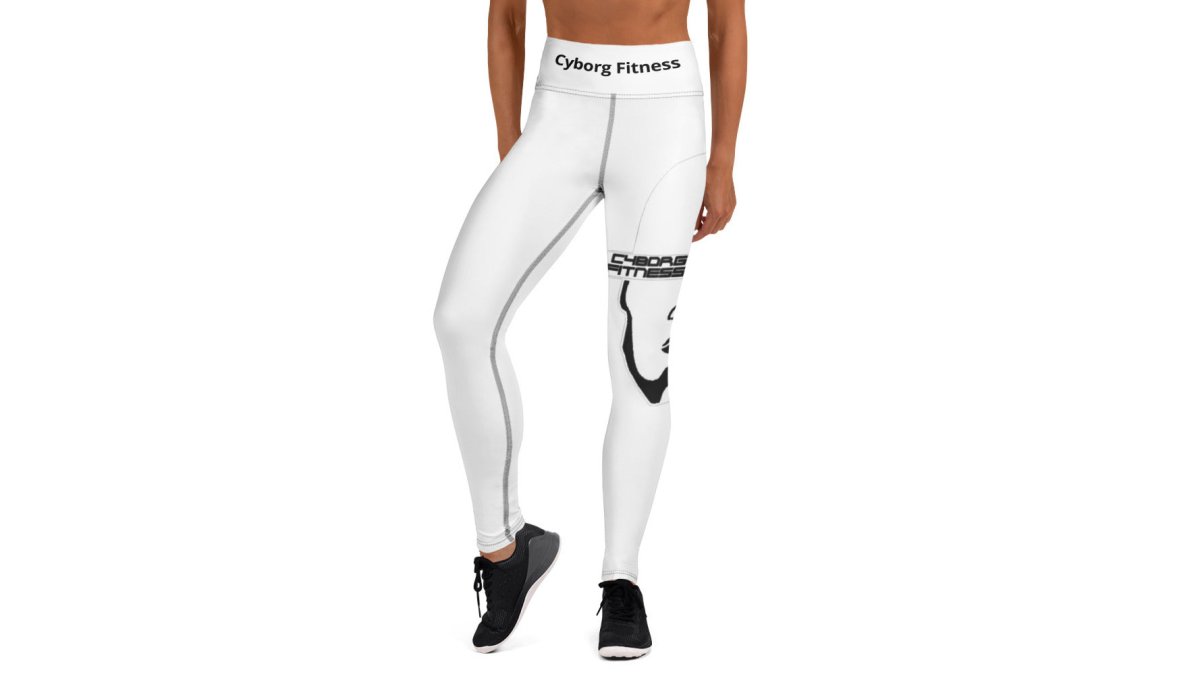
At CYBORG WEAR, we publish the fiber breakdown on every piece so you can judge performance before you buy. Our sports bra is made from moisture-wicking material with four-way stretch and flat seams, built for low and medium intensity sessions. The Cyber-Stitch Pocket Leggings use 74% recycled polyester and 26% elastane with UPF 50+ and a mild compression feel.


The brands that win on fabric are the ones that tell you what is in the fabric.
The real challenge is not finding activewear that claims to wick sweat. It is finding a brand that discloses its fiber composition and stands behind its construction.
Frequently Asked Questions
What are the best moisture-wicking fabrics for gym wear?
Polyester and nylon blends lead for sweat management because the fibers move moisture to the surface where it evaporates fast. Polyester dries quickly and holds its shape, while nylon adds softness and abrasion resistance. Spandex or elastane at roughly 18-26% gives four-way stretch and recovery. Natural fibers like cotton absorb sweat and stay damp, so they suit low-intensity sessions better than heavy training.
Are moisture-wicking and Dri-FIT the same thing?
Dri-FIT is a brand name for a moisture-wicking fabric technology, not a separate category. Any garment labeled moisture-wicking uses the same basic principle: synthetic fibers pull sweat away from the skin to the outer surface so it dries faster. The label matters less than the fiber composition and fabric weight, so check the blend on the tag rather than the marketing name.
How can you tell whether activewear fabric will last?
Look at fiber composition, fabric weight, and construction. Heavier knits around 230 g/m² resist pilling better than thin ones, and a high elastane content with four-way stretch recovers its shape after repeated wear. Flat seams, overlock stitching, and a gusset reduce stress points. Wash performance apparel in cold water and skip the dryer to slow shrinkage, fading, and elastic breakdown.
Is polyester good for activewear compared with nylon?
Both work, and they solve different problems. Polyester is the stronger choice for quick-drying and sweat management because it sheds moisture fast and resists stretching out. Nylon feels softer, holds color well, and handles abrasion, which helps with durability. Many performance pieces blend the two with spandex, so you get drying speed plus stretch recovery in one fabric.