 ultimate-guide
Moisture-Wicking Performance T-Shirts: Benefits Explained
Table of Contents
- What Moisture-Wicking Performance T-Shirts Actually Do
- Moisture-Wicking vs. Cotton: Which Performs Better
- The Real Benefits During High-Intensity Workouts
- Best Fabric Types for High-Intensity Workouts
- How to Wash Performance Apparel to Maintain Benefits
- Environmental Impact of Synthetic Wicking Fabrics
- Why Moisture-Wicking Performance T-Shirts Are Worth the Investment
- Frequently Asked Questions
Last Updated: October 1, 2026
What Moisture-Wicking Performance T-Shirts Actually Do
Moisture-wicking performance t-shirts pull sweat away from your skin and move it to the fabric's outer surface, where it evaporates faster than it would against your body. This is the core function that separates these shirts from standard cotton, they keep you dry during intense activity instead of trapping moisture against your skin.
The mechanism relies on capillary action, a physical property where liquid moves through tiny spaces in the fabric. Synthetic fibers like polyester have a hydrophobic structure, meaning they repel water. When sweat hits the fabric, it travels along the fibers toward the outer surface rather than absorbing into them. Cotton does the opposite: it's hydrophilic and absorbs moisture, holding it close to your skin.
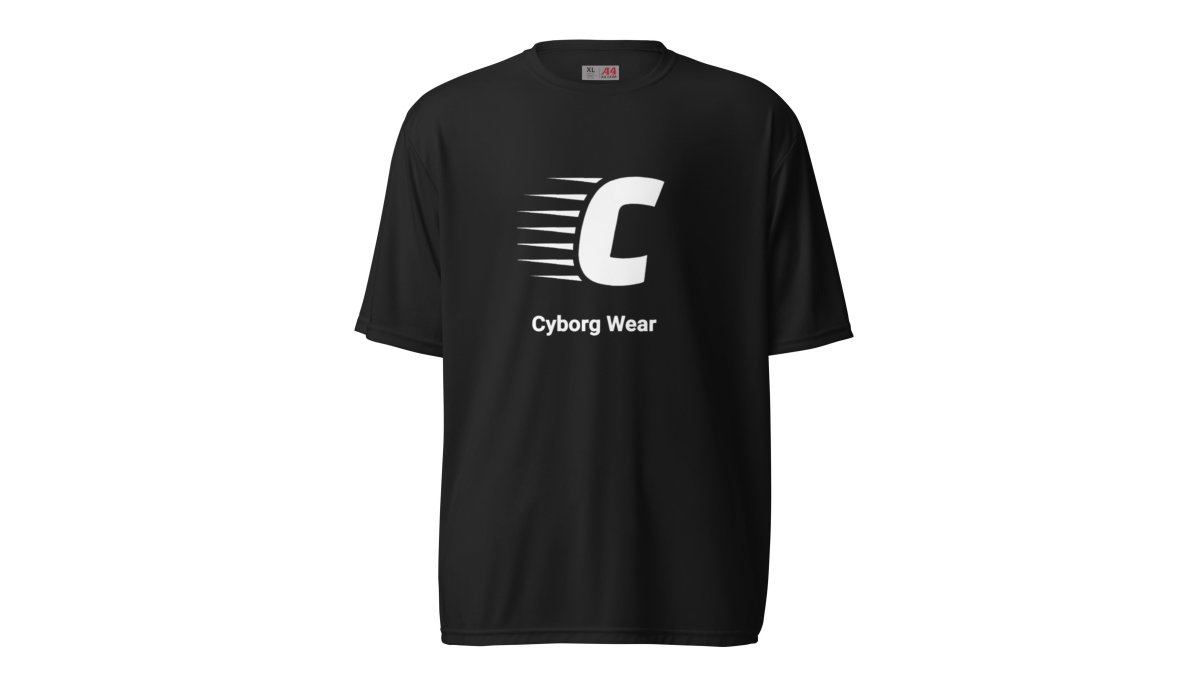
At CYBORG WEAR, we design our moisture-wicking performance t-shirts with this principle in mind. Our Unisex Performance Crew Neck T-Shirt uses 100% premium polyester with a 4 oz/yd² fabric weight, engineered specifically for sweat transport and quick-dry performance. The result is a shirt that keeps you comfortable whether you're hitting the gym or pushing through a trail run.

Understanding how moisture-wicking works explains why these shirts deliver real benefits during workouts. The faster sweat moves away from your body, the faster it evaporates, which cools your skin through evaporative cooling. This isn't marketing, it's physics.
Moisture-Wicking vs. Cotton: Which Performs Better
Cotton absorbs moisture instead of wicking it, which means sweat soaks into the fibers and stays against your skin longer. This creates a heavy, damp feeling and slows evaporative cooling. A cotton shirt can hold up to 27% of its own weight in water before feeling saturated.
Synthetic moisture-wicking fabrics like polyester transport sweat away from your body, allowing it to evaporate from the fabric surface. Polyester dries significantly faster than cotton, sometimes in half the time, because the fibers don't absorb the moisture; they simply move it along.
The performance gap widens during high-intensity activity. Cotton becomes heavier and colder as it absorbs sweat. Moisture-wicking synthetics maintain consistent weight and feel throughout your workout. For someone doing high-intensity interval training or running, this difference translates to reduced chafing, better temperature regulation, and improved comfort.
Cotton does have one advantage: breathability in cool, low-intensity settings. If you're sitting in an air-conditioned office, cotton's breathability feels fine. But the moment you start sweating hard, synthetic moisture-wicking fabrics outperform cotton every time. The choice comes down to your activity level and intensity.
The Real Benefits During High-Intensity Workouts
Sweat Management and Quick-Dry Technology
During intense workouts, your body produces sweat at a rate cotton simply can't handle. Moisture-wicking fabrics move that sweat away from your skin faster, which prevents the heavy, waterlogged feeling that slows you down. The evaporation process accelerates because sweat on the fabric surface dries faster than sweat trapped against your body.
Quick-dry technology refers to the combination of hydrophobic fibers and moisture transport design. When fibers repel water and move it outward, drying happens in parallel across the entire fabric surface rather than in sequence from the inside out. This is why a moisture-wicking shirt can feel almost dry while a cotton shirt is still soaked through.

The practical benefit is simple: you stay dry longer, which means better performance and less distraction during your workout. Sweat management also reduces the likelihood of chafing because the fabric isn't rubbing wet cotton against your skin repeatedly.
Odor Control and Antimicrobial Properties
Sweat itself doesn't smell. Odor develops when bacteria on your skin break down sweat and skin oils, producing organic compounds that create that gym smell. Cotton traps moisture and bacteria together, creating an ideal breeding ground. Moisture-wicking fabrics dry faster, which limits bacterial growth.
Many synthetic performance fabrics include antimicrobial treatments that actively inhibit bacterial growth. This isn't a gimmick, it's a practical feature that extends the time between washes and keeps your shirt fresher longer. Our Unisex Performance Crew Neck T-Shirt includes odor resistance built into the fabric, so you get this benefit without extra treatment.
The antimicrobial effect works best when combined with moisture transport. A dry fabric with antimicrobial treatment stops odor before it starts. This is why moisture-wicking shirts smell better longer than cotton, even when they're equally damp.
Temperature Regulation and Cooling Effects
Evaporative cooling is your body's primary cooling mechanism during exercise. Sweat evaporates from your skin, pulling heat away and lowering your core temperature. But if sweat sits on your skin without evaporating, your body stays hot and you fatigue faster.
Moisture-wicking fabrics accelerate evaporative cooling by moving sweat to the surface where air exposure is maximum. This creates a faster cooling effect compared to cotton, which traps sweat and slows evaporation. The temperature difference isn't dramatic, maybe 2-3 degrees Fahrenheit in real-world conditions, but that small difference compounds over a 45-minute workout.
Synthetic fibers also offer lower thermal retention. They don't trap heat the way cotton does, so you feel cooler even before evaporation kicks in. This is especially noticeable in warm environments where cotton becomes a liability.
Best Fabric Types for High-Intensity Workouts
Polyester and Synthetic Blends
Polyester is the gold standard for moisture-wicking because it's hydrophobic, durable, and affordable. Pure polyester performs reliably across many intensities and climates. It dries fast, resists fading, and maintains its shape through repeated washing.
Unisex performance crew neck t-shirt →
Polyester blends, typically polyester mixed with spandex or elastane, add stretch and comfort without sacrificing moisture transport. A 92% polyester, 8% spandex blend (used in our Women's and Men's Athletic T-Shirts) gives you the wicking performance of pure polyester plus the four-way stretch that allows full range of motion during workouts.

The blend ratio matters. Higher polyester content means better moisture transport; higher spandex content means better stretch and comfort. For high-intensity workouts, you want at least 85% polyester to maintain reliable wicking performance.
Four-Way Stretch and Breathability
Four-way stretch fabric moves with your body in all directions, up, down, left, and right. This matters during high-intensity workouts because restrictive fabric limits your range of motion and creates pressure points that lead to chafing.
Breathability in performance fabrics refers to moisture vapor transmission rate (MVTR), how quickly water vapor passes through the fabric. Higher MVTR means sweat vapor moves away from your body faster. This is different from moisture transport (liquid sweat movement), but both contribute to keeping you dry.
The best high-intensity fabrics combine four-way stretch with high breathability. Our Women's and Men's Athletic T-Shirts use sports mesh fabric with four-way stretch, which maximizes both movement freedom and vapor transmission.
| Fabric Type | Moisture Transport | Stretch | Durability | Best For |
|---|---|---|---|---|
| 100% Polyester | Excellent | Minimal | Very High | Distance running, cycling |
| Polyester/Spandex Blend | Excellent | 4-way | High | HIIT, gym workouts, CrossFit |
| Polyester Mesh | Excellent | 4-way | High | High-intensity sports, hot climates |
| Cotton/Polyester Blend | Good | Minimal | Medium | Low-intensity, casual wear |
How to Wash Performance Apparel to Maintain Benefits
Washing frequency affects moisture-wicking performance. Synthetic fibers can accumulate residue from sweat, detergent, and fabric softener, which reduces their hydrophobic properties. Washing removes this buildup and restores wicking efficiency.
Use cold water and mild detergent. Hot water can damage synthetic fibers and reduce elasticity in spandex blends. Avoid fabric softener, it coats fibers and interferes with moisture transport. Oxygen-based cleaners work better than chlorine bleach for synthetic fabrics.
Dry on low heat or air dry.
Washing after each use prevents bacteria and sweat residue from building up, which extends the lifespan of antimicrobial treatments and keeps odor resistance effective. Unlike cotton, moisture-wicking synthetics don't require as much water to clean thoroughly, so you're not wasting resources by washing more frequently.
Environmental Impact of Synthetic Wicking Fabrics
Synthetic fibers like polyester are petroleum-based products, which raises legitimate environmental concerns. Polyester production requires crude oil extraction and energy-intensive manufacturing. The environmental cost is real, but it's worth understanding the full picture.
Why Moisture-Wicking Performance T-Shirts Are Worth the Investment
Performance t-shirts cost more than basic cotton shirts, but the investment pays dividends through durability, comfort, and longevity. A quality moisture-wicking shirt lasts 2-3 times longer than cotton when properly maintained because synthetic fibers resist fading, pilling, and degradation.
Textile Technology and Manufacturing standards for performance apparel
EPA guidelines on microfiber pollution from synthetic textiles
Frequently Asked Questions
Do moisture-wicking shirts actually work?
Yes. Moisture-wicking performance t-shirts use synthetic fibers like polyester to pull sweat away from your skin through capillary action, moving it to the fabric's outer surface where it evaporates quickly. This keeps you drier and cooler than cotton, which absorbs sweat and holds moisture against your body. The technology is proven in athletic apparel across all performance levels.
Is moisture-wicking or cotton better for workouts?
Moisture-wicking fabrics outperform cotton during workouts. Cotton absorbs and retains sweat, making you feel heavy and cold as moisture clings to your skin. Moisture-wicking performance t-shirts use polyester blends and synthetic fibers that transport sweat away rapidly, keeping you dry and comfortable. For high-intensity exercise, moisture-wicking is the clear winner.
Can moisture-wicking shirts help prevent chafing?
Absolutely. Because moisture-wicking performance t-shirts keep sweat off your skin rather than trapping it, they reduce friction and irritation. Combined with reinforced seams and soft fabric construction, they minimize the conditions that cause chafing during intense movement and repetitive workouts.
How do I care for moisture-wicking performance apparel to keep it working?
Wash in cold water with mild detergent and avoid fabric softeners, which coat fibers and reduce wicking ability. Dry on low heat or air dry. Never bleach. Proper care preserves the hydrophobic properties of synthetic fibers and extends the lifespan of your performance t-shirt.