 listicle
Best Performance T-Shirts for Running: 2026 Review
Table of Contents
- What to Look for in Performance T-Shirts for Running
- The Best Fabric for Running Shirts: Polyester vs. Blends
- Quick Comparison: Top Performance T-Shirts for Running
- Best Running Shirts for Hot Weather and Sweat-Heavy Runs
- Anti-Chafing Running Shirts: Seams, Labels, and Fit
- Fit, Sizing, and Durability: What Runners Ask Before Buying
- Verdict: Which Performance T-Shirt Belongs in Your Rotation
- Frequently Asked Questions
Last Updated: October 12, 2026
What to Look for in Performance T-Shirts for Running
A running shirt only works if it moves sweat away from your skin faster than you produce it.
Performance t-shirts are athletic tops built from synthetic or blended knits designed to wick moisture, resist odor, and dry quickly during exercise.
Here's what most guides get wrong: they rank shirts by brand name instead of by fabric spec.
Below, we'll show you exactly how to read a spec sheet, match a shirt to your running conditions, and avoid the seams that cause chafing.
Fabric Weight, Breathability, and Moisture Management
Lighter fabric moves air and sweat more efficiently. Running shirts generally fall between 4 oz/yd² and 5.5 oz/yd², and that gap changes how the shirt feels at mile three.
- 4 oz/yd² and under: Best for hot weather and high sweat output. Dries fast, feels nearly weightless.
- 4.4 to 4.6 oz/yd²: The versatile middle ground. Enough structure for stretch and shape retention.
- 5.5 oz/yd² and up: Heavier hand-feel, better for cool-weather runs or casual wear.
Breathability comes from the knit, not the weight alone. An open mesh structure vents heat even when the fabric is slightly heavier. Moisture management is a chemical and structural property: the fiber pulls liquid to the surface where it evaporates.
The Best Fabric for Running Shirts: Polyester vs. Blends
Polyester wins for pure sweat management. It's hydrophobic, so it pushes moisture to the surface instead of absorbing it, and it dries faster than any natural fiber.
The best fabric for running shirts is 100% polyester for hot, sweaty runs, and a polyester-spandex blend when you want stretch and shape retention. Here's how the common options compare:
| Fabric | Moisture Handling | Stretch | Best For |
|---|---|---|---|
| 100% polyester | Fastest wicking, quickest dry | Low to none | Hot weather, high sweat |
| Polyester-spandex blend | Fast wicking plus four-way stretch | High | Mixed workouts, fitted feel |
| Cotton-poly blend | Moderate wicking, slower dry | Low | Cool-weather runs, casual wear |
A 100% polyester knit at 4 oz/yd² is the lightest, fastest-drying option.
Cotton blends sit at the other end. They feel softer against the skin but hold more water, so they suit cooler conditions or short, easy runs rather than long summer efforts.
Quick Comparison: Top Performance T-Shirts for Running
Here's a side-by-side look at the running tops in our lineup, so you can match fabric to workout at a glance.
| Shirt | Fabric | Weight | Price | Best For |
|---|---|---|---|---|
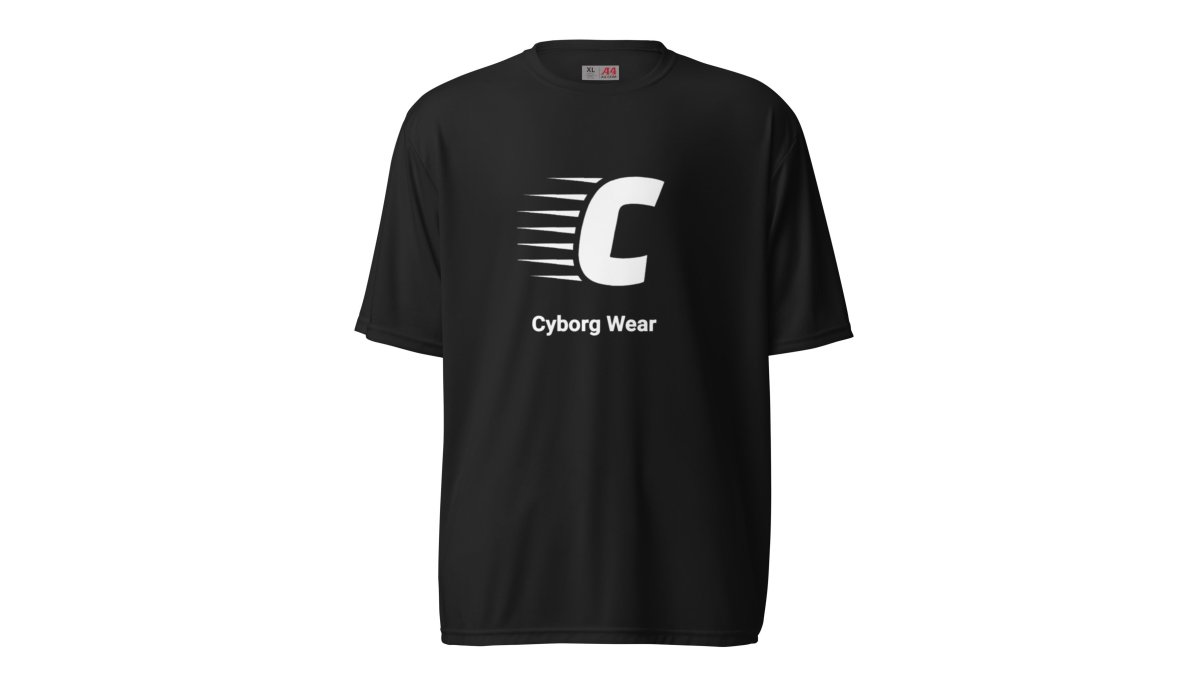
| Unisex Performance Crew Neck | 100% polyester | 4 oz/yd² | $32.00 | Hot weather, high sweat |
| Women's Athletic T-Shirt | Polyester-spandex mesh | 4.42 oz/yd² | $44.00 | Mixed workouts, stretch |
| Men's Athletic T-Shirt | Polyester-spandex mesh | 4.42 oz/yd² | $44.00 | Versatile training runs |
| Cyber Skull DryBlend® Tee | Cotton-poly blend | 5.5 oz/yd² | $22.50 | Cool weather, casual wear |
The lightest option handles heat best. The mesh blends add stretch for runners who mix lifting and cardio. The DryBlend® picks give you a heavier hand-feel for cooler mornings.

Best Running Shirts for Hot Weather and Sweat-Heavy Runs
For hot weather, go as light as possible and prioritize mesh ventilation.

That fabric weight is the lightest in our range, and it's the reason this shirt dries so quickly.
The relaxed fit leaves room for air to move. Fade and snag resistance means the print survives the laundry pile.
For runners who want stretch in the heat, the Women's Athletic T-Shirt and Men's Athletic T-Shirt ($44.00 each) use a 4.42 oz/yd² polyester-spandex mesh with four-way stretch and UPF 50+ protection.

Anti-Chafing Running Shirts: Seams, Labels, and Fit
Chafing is friction plus moisture plus salt.
Anti-chafing running shirts use flatlock or overlock seams, tear-away labels, and a fit that stays put without being tight.
The DryBlend® tees take a different route. Both the DryBlend® T-Shirt ($25.00) and the Cyber Skull Graphic DryBlend® Performance Tee ($22.50) use a tear-away label for zero chafing, plus taped neck and shoulders to stop seam roll.
Unisex performance crew neck t-shirt →
Where Chafing Actually Happens
Most chafing is not random, it clusters in predictable zones, and each one has a different cause:
- Nipples and chest: The single most common complaint on long runs. Loose fabric that swings side to side is the culprit. A closer-fitting knit or a shirt with a smoother chest panel reduces the movement.
- Underarms and side ribs: Caused by a seam ridge or bunched fabric meeting the arm swing. Flatlock seams and a trimmer cut help here more than any coating.
- Neck and collar line: A gapping collar or a scratchy tag rubs with every head turn. Tear-away labels and a shaped collar solve this.
Fabric Choice and Chafing
Fabric weight and texture matter as much as seams. A heavier cotton-poly blend holds moisture against the skin longer, which keeps the skin soft and more vulnerable. A light 100% polyester or polyester-spandex mesh moves sweat away faster, so the skin stays drier and more resistant to friction. This is one reason a 4 oz/yd² knit tends to chafe less on a humid long run than a 5.5 oz/yd² blend, even when both have flat seams.
Fit issues to watch for:
- Shoulder seams that sit past the edge of your shoulder and rub under a pack strap
- A collar that gaps and lets the shirt shift
- Sleeves that ride up and bunch at the armpit
Fit, Sizing, and Durability: What Runners Ask Before Buying
Sizing runs differently across fabric types, so always check the chart for the specific shirt rather than assuming your usual size carries over. The men's athletic tee runs from XS to 3XL with chest measurements from 36 ¼ inches to 52 inches. The women's athletic tee uses its own chart, and the unisex performance crew neck is cut with a relaxed body that many runners size down in for a closer fit.

Fit by Body Type and Running Style
Fit is not one-size-fits-all, and the right cut depends on how you run:
- Broad shoulders or a muscular build: Look for a shirt with a higher shoulder seam and a bit of spandex. A rigid 100% polyester knit with a low armhole will pull across the chest and restrict arm swing.
- Narrower frame: A relaxed unisex cut can billow and chafe. A fitted mesh tee with four-way stretch stays put without squeezing.
- Long torso: Check the body length spec, not just the chest. A shirt that rides up exposes the lower back to sun and pack straps.
- Runners who layer: Size the base shirt close to the body so a shell or vest can sit over it without bunching.
A common pattern is that runners buy one size too large to avoid tightness, then deal with chafing from excess fabric. A close but unrestricted fit almost always performs better.
Width, Size Range, and Inclusive Options
Availability matters as much as fabric. Our lineup spans XS through 3XL on the men's athletic tee, with the women's and unisex styles carrying their own ranges. If you are between sizes, size up on a 100% polyester knit (it has little give) and stay true to size on a polyester-spandex mesh (the stretch covers the gap). Wider-bodied runners and those who prefer a roomier cut should confirm the chest and body-length numbers rather than relying on S/M/L labels, which vary between styles.
Durability Over Time and Replacement Indicators
Durability comes down to two things: fabric construction and print quality. Our performance crew neck is fade and snag resistant, which matters if you run outdoors near branches or wear a hydration pack.
A common mistake is judging a shirt by how it feels in the store. A slightly stiffer mesh often holds its shape longer than a soft knit that pills after a month.
How long should a running shirt last? A well-made performance tee typically holds up for regular use across a season or more, depending on wash frequency and how you dry it. Watch for these signs it is time to replace it:
- Stretched-out collar or cuffs that no longer hold shape after washing
- Persistent odor that survives a wash, a sign odor-resistant treatment has worn off
- Pilling or thinning in high-friction zones like the underarms and lower back
- Seam separation or loose stitching along the shoulders and side seams
Air-dry mesh fabrics to protect the stretch fibers.
Verdict: Which Performance T-Shirt Belongs in Your Rotation
Match the shirt to the run, not to the label. For hot, sweaty conditions, the Unisex Performance Crew Neck T-Shirt at $32.00 is our top pick: 4 oz/yd², 100% polyester, UPF44+, and built to dry fast. For mixed workouts where you want stretch, the mesh athletic tees at $44.00 give you four-way movement with UPF 50+.
Every runner's rotation needs at least one light, fast-drying shirt for the worst heat. Start there.
Frequently Asked Questions
What fabric is best for running shirts?
Polyester and polyester-spandex blends are the best fabric for running shirts because they wick moisture away from your skin and dry quickly. Look for four-way stretch sports mesh fabrics that move with you. Cotton holds sweat and gets heavy, which causes chafing on longer runs. The Unisex performance crew neck t-shirt uses 100% premium polyester at 4 oz/yd², which is lightweight enough for intense sessions while still offering UPF44+ protection.
Are moisture-wicking shirts good for running?
Yes. Moisture-wicking fabrics pull sweat off your skin and spread it across the surface of the shirt so it evaporates faster. That keeps you drier, reduces chafing, and helps regulate body temperature. DryBlend® moisture-management fabric, used in the Cyber Skull Graphic Performance Tee, moves sweat away during high-output sessions. For hot weather runs, a moisture-wicking performance t-shirt is far better than cotton because it will not cling or get heavy when soaked.
How should a running shirt fit?
A running shirt should sit close to your body without restricting arm swing or breathing. Too loose and the fabric bunches and rubs; too tight and it limits movement. Look for a relaxed or comfortable fit with reinforced shoulder seams and taped necklines. The Unisex performance crew neck t-shirt has a relaxed fit and reinforced shoulder seams, while the Men's athletic t-shirt offers a comfortable fit with overlock and coverstitch construction that holds its shape through repeated wash cycles.
How often should you replace a running shirt?
Replace a running shirt when the fabric loses its stretch, the seams start fraying, or it holds onto odor even after washing. Most performance shirts last 50 to 100 washes depending on fabric weight and care. Heavier fabrics like the 5.5 oz/yd² DryBlend® T-Shirt tend to outlast lighter ones. If you run five days a week, rotating two or three shirts extends the life of each one and keeps them fresher between washes.
What is the best shirt for running in hot weather?
The best running shirts for hot weather are lightweight, light-colored, and made from breathable polyester or mesh. Look for UPF protection and a fabric weight under 5 oz/yd². The Unisex performance crew neck t-shirt weighs just 4 oz/yd² with UPF44+ protection, and the Women's athletic t-shirt uses a soft four-way stretch sports mesh with UPF 50+. Both are designed to keep you cool and dry when temperatures climb, and they resist fading and snagging through repeated use.
Building a running wardrobe that actually performs means choosing fabric over branding. CYBORG WEAR makes that choice easier with moisture-wicking performance tees, four-way stretch mesh athletic shirts, and DryBlend® options with tear-away labels for zero chafing. Get started with CYBORG WEAR and find a running shirt that keeps you dry from the first mile to the last.