 how-to
Choosing Between Short and Long Sleeve Rash Guards
Last Updated: November 3, 2026
Quick Summary
Choosing between short and long sleeve rash guards comes down to coverage versus cooling and mobility. Long sleeves protect more skin from UV rays and mat abrasion, while short sleeves feel cooler and let your arms move more freely. Pick by activity, climate and session length.
- Long sleeves cover more arm skin and can help protect arms from UV rays.
- Short sleeves usually feel more breathable and allow freer arm movement.
- Under a gi, short sleeves add the least bulk and wrist bunching.
- Long sleeves in hot weather can trap heat and sweat, so test them for a full session first.
- Settle sleeve length first, then choose fit, UPF rating, fabric and color.
Table of Contents
- How Sleeve Length Changes Coverage, Cooling and Mobility
- Matching Sleeve Length to Your Activity and Climate
- Layering Your Rash Guard With Gis, Wetsuits and Training Gear
- Best Moisture Wicking Rash Guards for Women: What to Look For
- Rash Guard Sizing Guide: Getting a Fit That Works With Your Sleeve Choice
- Caring for Your Rash Guard and Choosing Your Next Pair From CYBORG WEAR
- Frequently Asked Questions
How Sleeve Length Changes Coverage, Cooling and Mobility
Choosing between a short and long sleeve rash guard comes down to one trade-off: coverage versus cooling and freedom of movement. For the basic benefits and fit before you compare sleeves, see rash guard benefits and fit. Long sleeves cover more skin, which helps with sun protection and skin abrasions. See how long sleeves perform for sun protection across different climates. Short sleeves usually feel cooler and move more freely. Neither option is universally better. The right choice depends on where you train and what you do in the water or on the mat.
At CYBORG WEAR, we see the same question come up again and again, so this guide walks through the decision step by step. Verywell Fit notes that long sleeves can help protect arms from UV rays, while short sleeves may feel more breathable and comfortable. That single difference drives most of the decision.
Here is how the two sleeve lengths compare on the main factors:
| Factor | Long Sleeve | Short Sleeve |
|---|---|---|
| Sun coverage | More arm coverage | Less arm coverage |
| Cooling | Warmer | Feels cooler |
| Mobility | Slightly more restrictive | Freer arm movement |
| Abrasion protection | Better for mat contact | Exposed forearms |
| Best for | Long sessions in sun, cool water | Hot conditions, competitive grappling |
Sleeve length is one of several choices. SwimOutlet's rash guard buying guide lists sleeve length alongside fit, UPF rating, fabric and color as the main decisions. Settle sleeve length first, then the rest falls into place.
Watch out: Long sleeves in hot weather can trap heat and sweat. If you train in warm conditions, test a long sleeve for a full session before committing to it.
Matching Sleeve Length to Your Activity and Climate
A short decision path by activity, climate and exposure can turn the trade-off into a recommendation you can act on before your next session.
Step 1: Start With the Activity You Do Most
- Gi grappling: The gi already covers your arms, so short sleeves usually win on airflow and reduced bulk under the jacket. Long sleeves make more sense if you roll no-gi often and want forearm coverage against mat contact.
- No-gi grappling and wrestling: Long sleeves add a layer between skin and mat, which many practitioners prefer for abrasion and mat burn. Short sleeves suit hot rooms and athletes who feel restricted by cuffs.
- Surfing and open-water paddling: Long sleeves add UV coverage and cut wind chill during long sessions. Short sleeves suit warm water and short beach sessions where heat build-up dominates.
- Pool and lap swimming: Short sleeves reduce drag and bulk; long sleeves are mainly a sun and chill choice for outdoor laps.
Step 2: Adjust for Climate and Exposure
Ask two questions: how hot is the environment, and how much direct sun will you get?
- Hot and shaded (indoor mat room): Short sleeves are the default. Long sleeves can trap heat and sweat during hard rounds.
- Hot and sunny (beach, outdoor pool): Long sleeves earn their place if you will be exposed for more than a short session; otherwise short sleeves plus sunscreen on the forearms is a common compromise.
- Cool or windy (early-morning surf, cold-water paddling): Long sleeves add warmth and wind resistance that short sleeves cannot match.
- Mixed conditions: Treat sleeve length as the variable you change first, then adjust fit and fabric weight.
Step 3: Weigh Session Length
A short paddle in warm water usually favors short sleeves. A long session in bright, reflective conditions often favors long sleeves. As a rule of thumb, the longer and sunnier the session, the more a long sleeve pays off; the shorter and hotter the session, the more a short sleeve does.
Watch out: Long sleeves in hot weather can trap heat and sweat. If you train in warm conditions, test a long sleeve for a full session before committing to it.
Layering Your Rash Guard With Gis, Wetsuits and Training Gear
A rash guard rarely works alone. Browse performance tops for training layers to pair with your rash guard. Most people wear it under a gi, a wetsuit or training shorts, and each pairing changes how sleeve length performs. Layer compatibility is worth working through before you buy.

- Under a gi: Short sleeves usually add the least bulk, and the gi already provides arm coverage. Long sleeves can bunch at the wrists under gi cuffs and add warmth during hard rounds. If you train gi most of the time, short sleeves are the lower-friction choice; keep a long sleeve for no-gi days.
- Under a wetsuit: A long sleeve rash guard adds warmth and reduces chafing at the wrists and shoulders, where the wetsuit can rub. Check that the wetsuit cuffs still seal over the rash guard; a thick long sleeve can break the seal and let water flush through. Short sleeves suit warm water where the wetsuit itself provides arm coverage.
- With training shorts for cold conditions: Layer carefully so no single piece restricts movement. A long sleeve rash guard plus shorts is a common cool-weather combination; test that the waistband and sleeve cuffs do not bunch when you move.
How Layering Changes Fit and Chafing
Layering adds thickness, and thickness changes how a sleeve behaves. A long sleeve under a wetsuit compresses against the skin, which can improve skin contact but also concentrate pressure at seams. Flat seams and a coverstitch reduce irritation where layers rub. Short sleeves under a gi avoid wrist bunching but leave forearms exposed to mat contact in no-gi transitions.
Test the combination before a session. Bulk that feels fine on a bench can restrict a sweep or a paddle stroke. A common pattern is to size the rash guard for the layer you wear most, then check the sleeve length against your other gear.
Watch out: A long sleeve that is too thick can break a wetsuit cuff seal, and a short sleeve that rides up can leave gaps at the wrist under a gi. Check both before a long session.
Best Moisture Wicking Rash Guards for Women: What to Look For
Moisture management matters for both sleeve lengths. For a curated shortlist, see no-slip rash guards for women that stay put during activity. Look for a fabric that pulls sweat away from the skin and dries fast. Our women's rash guard is made from 82% polyester and 18% spandex, with a very soft four-way stretch fabric that stretches and recovers across both the cross and lengthwise grains. It is rated UPF 50+ and has a fitted design with flat seams and a coverstitch to reduce irritation.
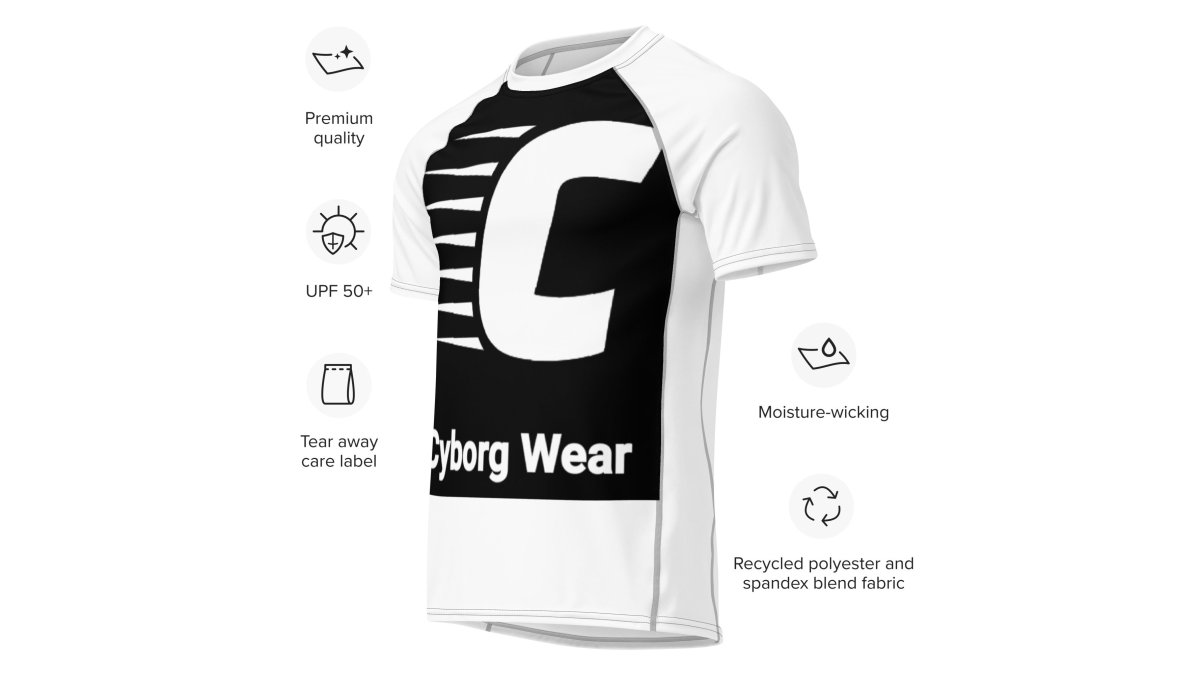
If you prefer a recycled option, the all-over print rash guard uses 81% recycled polyester and 19% spandex in the US, is described as moisture-wicking and carries UPF 50+ protection.
Watch out: A slightly longer body and sleeve improves coverage, but a cut that is too loose can ride up and bunch during movement. Choose a fit that stays put.
Rash Guard Sizing Guide: Getting a Fit That Works With Your Sleeve Choice
Fit changes how a sleeve performs. Learn whether a rash guard should fit snugly before you pick a sleeve length and size. A snug sleeve gives better skin contact and reduces fabric flapping in the water. It can also restrict movement if it is too tight across the shoulders.
Measure your chest, waist and hips, then compare against the size chart for the specific product. Our women's rash guard sizing runs from XS to 3XL, and our men's rash guard size guide lists chest, waist and hip measurements in centimeters. Because the charts differ by product, always check the listing before you order.
For long sleeves, check that the sleeve length reaches your wrist without pulling when you extend your arms. For short sleeves, make sure the armhole fits without digging in.
Caring for Your Rash Guard and Choosing Your Next Pair From CYBORG WEAR
Rinse your rash guard in fresh water after every session, especially after salt water or chlorine. Dry it flat or hang it out of direct sun, since prolonged UV exposure can wear down fabric over time. Avoid fabric softeners, which can reduce the moisture-wicking performance.
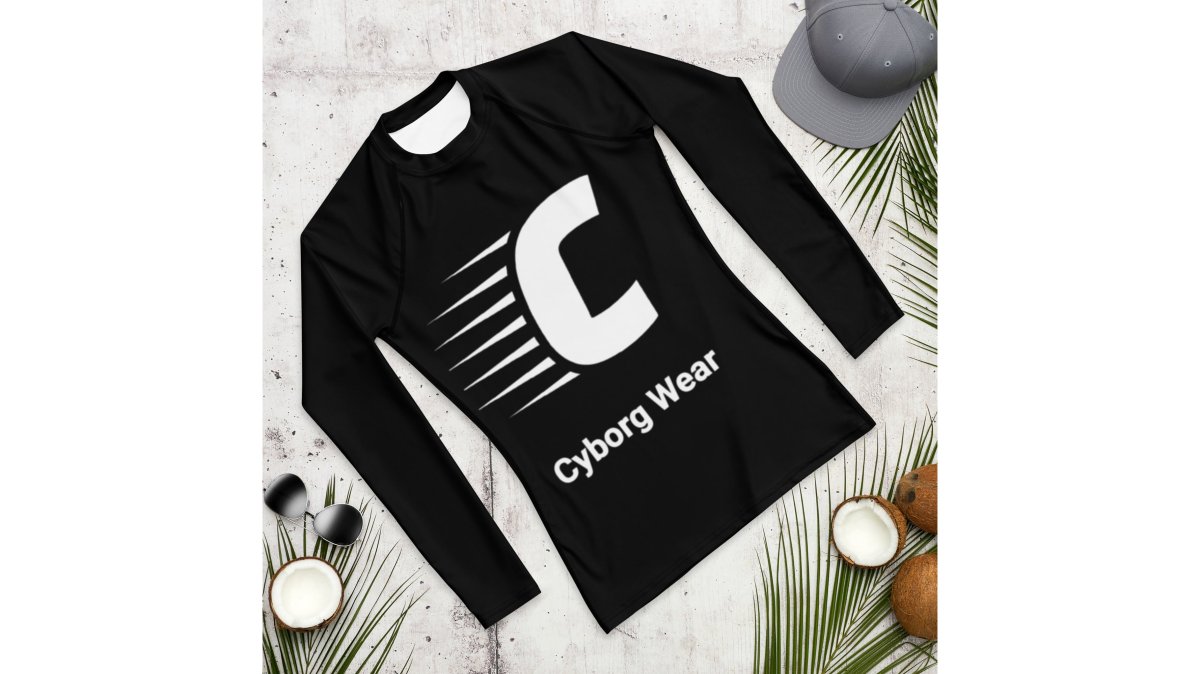
Once you know whether you need coverage or cooling, choose the cut that matches. Browse the men's rash guard or the women's rash guard at CYBORG WEAR and pick the sleeve length that fits your training.


Frequently Asked Questions
Should I get a long or short sleeve rash guard?
Choose long sleeves if you want more coverage from sun exposure, mat contact or abrasions, or if you train in cooler conditions. Choose short sleeves if you train in warm weather and prioritize airflow and unrestricted arm movement. Many people own both: long sleeves for outdoor sessions and open-water work, short sleeves for indoor training in heat. Your own comfort and the activity you do most often should guide the decision more than any single rule.
Should I size up or down for a rash guard?
Rash guards are meant to be fitted, so most people should stay close to their usual size and check the size chart rather than automatically sizing up. Measure your chest, waist and hips and compare them with the brand's guide. If you are between sizes, consider how much compression you want and whether you plan to layer underneath. Long sleeves may need slightly more room in the arm length if you want full range of motion.
Do long sleeve rash guards provide better protection against mat burns?
Long sleeves cover more of the arm, so they can reduce skin contact with the mat and with training partners during grappling. They do not replace proper hygiene or mat care, and short sleeves still protect the upper arm and torso. If mat burn is your main concern, a long sleeve style with a durable, smooth fabric is the stronger choice.
Are short sleeve rash guards more breathable during summer workouts?
Short sleeves expose more skin to air, which generally helps with cooling and sweat evaporation during warm-weather training. Breathability also depends on fabric, so look for a moisture-wicking polyester and spandex blend. The CYBORG WEAR long-sleeve men's and women's rash guards list UPF 50+ protection, so pair them with the activity and climate that call for coverage.
Choosing the right sleeve length is about matching the garment to your sessions, not chasing a single best option. Start with your main activity, adjust for climate, and confirm the fit before you commit. CYBORG WEAR makes rash guards built around soft four-way stretch fabric and UPF 50+ protection, so you can train comfortably in the length that suits you. SHOP NOW.