 how-to
Why Wear a Rash Guard for Surfing: Benefits and Fit
Last Updated: October 29, 2026
Quick Summary
A rash guard is a snug, stretchy top made from polyester and spandex that protects your skin from wax, fiberglass, and sun while you surf. It adds some warmth in cooler water, but it is not insulation. Use it alongside sunscreen on exposed areas.
- It creates a barrier between your chest, ribs, and arms and the surfboard.
- In cool water, it traps a film of water against the skin to hold in body heat.
- Choose a long-sleeve version for most all-around surfing.
- Check that the torso shows no vertical folds when you bend forward.
- Rinse in fresh water after each session and wash in cold water with mild detergent.
Table of Contents
- What a Rash Guard Does in the Water
- Rash Guard Benefits for Surfing
- Protection From Board Rash, Chafing and Sun
- Long-Sleeve vs Short-Sleeve Rash Guard
- Rash Guard Fit for Surfing
- How to Wash a Rash Guard So It Lasts
- Choosing Your Next Rash Guard
- Frequently Asked Questions
What a Rash Guard Does in the Water
A rash guard is a snug, stretchy top made from polyester and spandex. The fabric acts as a barrier between your body and the surfboard, the water, and the sun.
Most surfers wear one for a simple reason. Surfing puts your chest, ribs, and arms against wax and fiberglass.
Rash Guard Benefits for Surfing
Warmth: In cooler water, a thin layer traps a film of water against the skin and holds in body heat. It takes the edge off an early-morning session, but it is not insulation.
Rash guard or wetsuit? How to decide
A simple rule: if you would feel cold standing wet in the shade, a rash guard by itself probably won't be enough once you're sitting still between sets.
What a rash guard does not do
A common mistake is treating a rash guard as a substitute for sunscreen on exposed areas like the face, neck, and hands. Use both. Likewise, a rash guard is not a flotation device and does not replace a wetsuit when the water turns cold. It is one layer in a system, and knowing where it stops is as useful as knowing what it does. Understanding the nuances of UPF clothing versus sunscreen helps you optimize your protection strategy for long sessions in the sun.
Protection From Board Rash, Chafing and Sun
Tip: A rash guard protects your skin, but it does not prevent every burn. Cover your face, neck, and hands with sunscreen as well.
Long-Sleeve vs Short-Sleeve Rash Guard
For most surfers, a long-sleeve rash guard is the better all-around choice. Compare rash guards and compression shirts for water use side by side before you buy. Pick short sleeves only if you surf mainly in warm water and short sessions.
Rash Guard Fit for Surfing
Fit matters more in surfing than in almost any other water activity because of how much time your chest and ribs spend pressed against the board. A loose hem rides up when you arch for a pop-up, exposing the stomach to wax and fiberglass. A loose sleeve slides down the forearm mid-paddle and bunches at the elbow. A close fit eliminates both problems before they start. See how a rash guard should feel on the body for guidance on whether a snug fit is right.
What to check before you paddle out
- Torso: The body should sit flat against your skin with no vertical folds when you bend forward. If you can pinch more than an inch of fabric at the ribs, size down.
- Shoulders and reach: Raise both arms overhead and rotate them in a full paddle circle. The fabric should stretch without pulling the hem out of place or restricting the shoulder joint.
- Sleeves: Long sleeves should end near the wrist bone without riding up when you extend your arm. A sleeve that stops mid-forearm leaves a gap where wax and board contact hit bare skin.
- Seams: Flatlock or flat ergonomic seams belong on the outside or sit flush against the skin. Raised seams under the arm or across the chest create pressure points during repeated paddling.
- Length: A slightly longer body hem keeps the shirt tucked under a wetsuit or boardshorts and stops it from riding up when you're prone on the board.
Surf fit vs. swim-shirt fit
A casual swim shirt is cut looser for lounging and wading. That extra room is fine in calm water, but in the surf zone it catches water on the pop-up, drags during paddling, and shifts against the board. A surf-specific rash guard is cut closer through the chest and shoulders and longer in the body for exactly this reason. If a shirt feels comfortable and roomy standing in the shop, it is probably too loose for a two-hour session.
All-over print men’s rash guard →
Try before you commit
Fit varies by brand and by cut, so try on more than one size if you can, and test the paddle motion in the fitting room rather than just standing still. A shirt that feels slightly compressive dry will loosen a little once wet, which is the fit you want on the board.
Fit decides how well a rash guard performs in the water, and these checks help you spot a good one before you paddle out.
| Check | What to look for | Fix if it fails |
|---|---|---|
| Torso | No vertical folds when bending; no more than an inch pinched at the ribs | Size down |
| Shoulders and reach | Stretches through a full paddle circle without pulling the hem out | Try a different cut |
| Sleeves | Ends near the wrist bone and does not ride up | Choose a longer sleeve |
| Seams | Flatlock or flat seams on the outside or flush with skin | Pick another style |
| Length | Body hem stays tucked under a wetsuit or boardshorts | Choose a longer body cut |
How to Wash a Rash Guard So It Lasts
Rinse your rash guard in fresh water after every session. Salt and sand break down fabric over time, and sunscreen residue can stain it.
Wash it gently by hand or on a delicate cycle with cold water. Use a mild detergent and avoid bleach, fabric softener, and harsh chemicals. Lay it flat or hang it in the shade to dry, because direct heat weakens elastic fibers.
- Rinse after each session
- Wash in cold water with mild detergent
- Skip the dryer and keep it out of direct sun
- Store it dry and unfolded
Watch out: Wringing out a rash guard can stretch and warp the fabric. Press it gently between towels instead.
Choosing Your Next Rash Guard
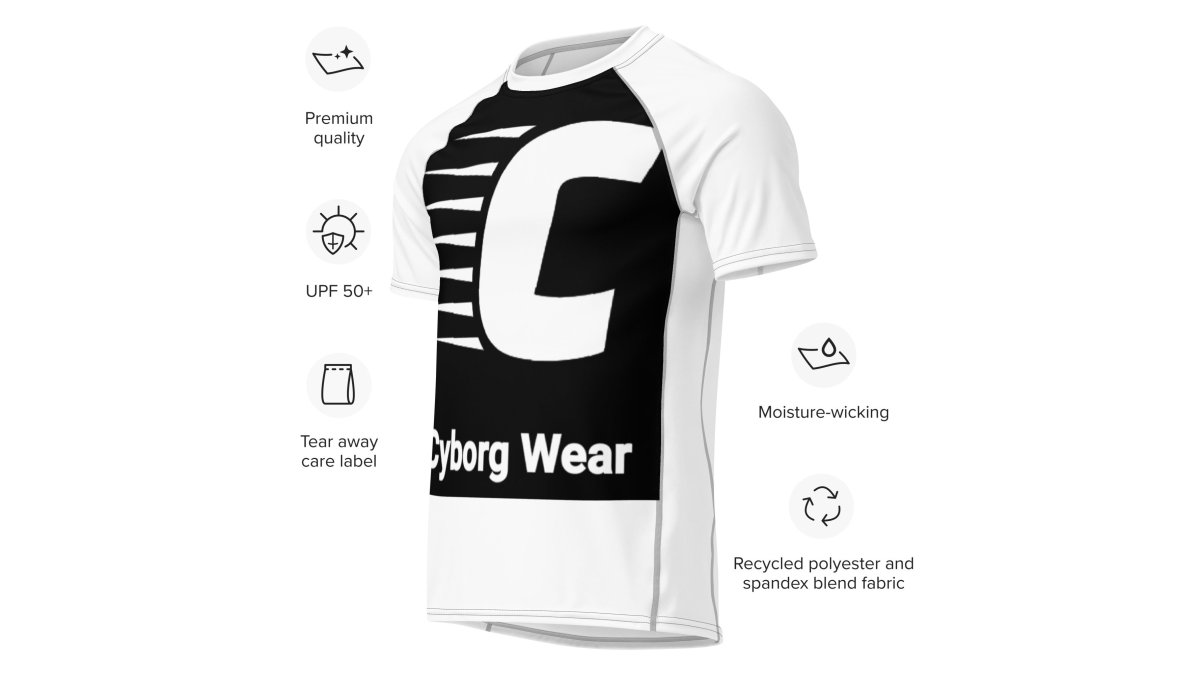
Our All Over Print Men's Rash Guard is made from 81% recycled polyester and 19% spandex, has a UPF 50+ rating and flatlock seams, and is priced at $46.50.

Frequently Asked Questions
Do I need a rash guard when surfing?
A rash guard is not mandatory, but it is one of the simplest ways to cut down on board rash, chafing and sunburn during long sessions. Many surfers wear one for the chest, back and arms, especially when wax or sun exposure is a concern. If you surf for an hour or two in mild conditions and rarely rub against your board, you may be fine without one. For longer sessions or stronger sun, a snug, UPF 50+ rash guard is a practical choice. The right answer depends on your skin sensitivity and how often you spend time lying on the board.
How does a rash guard help prevent surf rash?
Surf rash forms when skin rubs repeatedly against a surfboard, wax or the water itself. A rash guard adds a smooth, stretchy layer between your skin and those surfaces, so friction is spread across the fabric rather than concentrated on your chest, stomach and ribs. The fabric does not stop all abrasion, but it reduces the rubbing that causes most irritation. A snug fit matters here, because loose fabric can bunch up and create its own chafing.
Should I choose a long-sleeve or short-sleeve rash guard for surfing?
A long-sleeve rash guard covers more skin, which means more protection from sun and more coverage against paddling abrasions on the arms. A short-sleeve version is cooler and easier to move in, which some surfers prefer in warm water. If you spend long sessions in strong sun, a long-sleeve style is usually the better choice. In warm, sunny conditions where you want maximum airflow, a short-sleeve option may be more comfortable.
How should a rash guard fit for surfing?
A rash guard for surfing should fit snugly without restricting movement. It should sit close to the body across the shoulders and chest, with sleeves that stay in place when you paddle. Fabric that is too loose can flap or bunch, while a cut that is too tight can limit your range of motion. Try a few reaches and a paddle motion before buying. Check the size chart carefully, since sizing varies between brands and cuts.
Get started with CYBORG WEAR and find a rash guard that fits well, protects your skin, and lasts through regular surf sessions. SHOP NOW.