 ultimate-guide
How to Choose Hats That Fit, Last, and Suit Every Occasion
Last Updated: October 31, 2026
Quick Summary
Choose hats by measuring your head circumference about half an inch above your ears, then matching crown shape, fabric, and closure to your face and season. A snug band, a finger's width of crown clearance, and a brim clear of your sightlines confirm the fit.
- Measure head circumference twice and take the larger number as your hat size.
- Adjustable closures forgive roughly a half size; fitted caps do not.
- A six-panel crown is the standard cap build with seams meeting at a top button.
- Hand-wash hats in cool water and air-dry over a bowl to hold crown shape.
- Cotton twill is breathable, polyester blends resist stretching, and wool blends need more care.
Table of Contents
- The Hat Types Worth Knowing Before You Buy
- How to Measure Hat Size in Two Minutes
- Reading a Hat Size Chart Without Guessing
- How Should a Hat Fit? Crown, Band, and Brim Checkpoints
- How to Clean a Hat So It Keeps Its Shape and Color
- Hats for Different Occasions, From the Gym to the Weekend
- Materials, Price, and Durability: What You Actually Pay For
- Pick Your Cap and Check the Fit Guide
- Frequently Asked Questions
The Hat Types Worth Knowing Before You Buy
The global headwear market was valued at USD 37.0 billion in 2025 and is projected to reach USD 39.4 billion in 2026, according to Grand View Research's headwear market report. That's a lot of hats changing hands, and most buyers still pick by look alone. Hats are often the most overlooked piece in an active wardrobe: get the shape right and everything else follows. Below, we break down the styles worth knowing, how each is built, how to measure hat size, and how to keep a cap looking sharp for years.
Hats are a category where the difference between a good buy and a bad one comes down to three things: crown shape, fabric, and fit. Nail those and a well-built cap outlasts a poor one. The fastest way to compare styles is to read four construction details on any label or product page: panel count, crown profile, visor type, and closure.
- Panel count. A six-panel crown is the standard cap build; the seams meet at a button on top and give the crown its shape. Five-panel caps use a single front panel, which gives a cleaner face for embroidery and a lower, more casual profile. More panels generally mean more structure; fewer panels mean a softer, packable hat.
- Crown profile. Low-profile crowns sit close to the skull; mid-profile is the most versatile; high-profile crowns add height and suit rounder faces. Structured crowns hold their shape because of buckram or fused interlining behind the front panels; unstructured crowns are soft and collapse flat.
- Visor type. Curved visors frame the face and are the classic baseball-cap look. Flat visors are stiffer and read as streetwear. Visor length matters too: a longer brim shades more of the face, a shorter brim keeps sightlines clear.
- Closure. Plastic snap, metal buckle, hook-and-loop, elastic stretch band, or fitted (no closure). Adjustable closures forgive a half size; fitted caps do not.
Baseball Caps, Snapbacks, and Trucker Hats
The baseball cap is a common default, with a curved visor, a soft or structured crown, and an adjustable back.
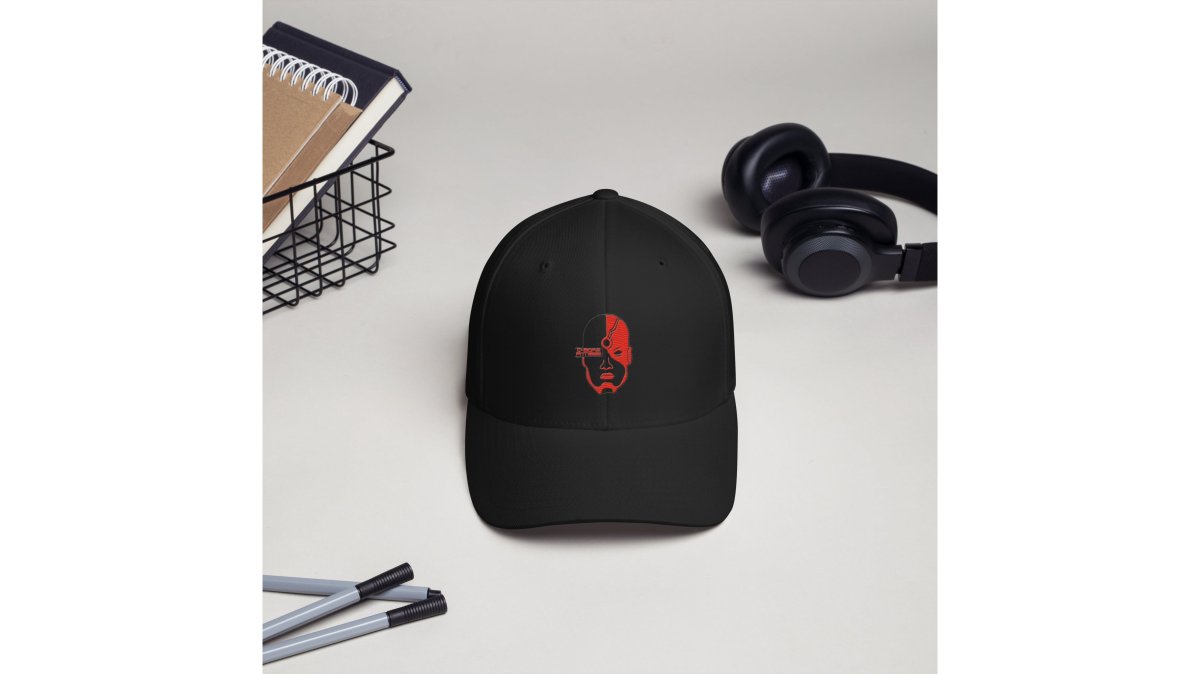
Structured caps hold their shape. If you want a structured cap with an elastic stretch band, our structured twill cap uses a 63% polyester, 34% cotton, 3% spandex twill. Prefer a flat visor? Browse the snapback hat with its grey undervisor.


Beanies, Bucket Hats, and Flat-Brim Caps
Beanies cover the cold-weather gap that caps can't. Browse the embroidered beanie to compare knit, cuff, and material. Fit matters more here than anywhere: a beanie should sit just above the eyebrows without squeezing the temples, and a cuff adds warmth without bulk. Knit construction matters too, a ribbed knit stretches and recovers, while a loose knit sags after a season.
Bucket hats run the other direction, built for sun. Our bucket hat is made from 100% cotton twill with sewn eyelets for breathability.

How to Measure Hat Size in Two Minutes
To measure hat size, wrap a soft measuring tape around your head about half an inch above your ears, keep it level and snug, and note the circumference in inches or centimeters.
Do it twice. If the numbers differ, take the larger one. For reference, our structured twill cap has a head circumference of 22 to 23⅞ inches (55.9 to 60.6 cm).
Fit troubleshooting: what the number doesn't tell you
Circumference gets you close, but three other variables decide whether a hat actually fits. Check these before you buy:
- Head shape. Most heads are oval, but some are rounder or longer front-to-back. A round head fills a structured crown evenly; a longer oval head may find high-profile crowns sit better than low-profile ones. If a cap feels tight at the temples but loose at the back, the crown shape is wrong for you, not the size.
- Hair volume. Thick, curly, or long hair adds measurable volume. Measure with your hair as you'd wear it, and if you plan to wear the hat over a different hairstyle, size for the larger version. A beanie worn over long hair needs more room than a cap worn over a short cut.
- Closure type. Adjustable caps (snap, buckle, hook-and-loop, elastic band) forgive roughly a half size in either direction. Fitted caps do not, a fitted cap that is a half size small will leave marks, and one that is a half size large will slide. If you are between sizes, choose adjustable or size up in fitted.
Reading a hat size chart without guessing
Hat size charts convert head circumference into labeled sizes, and the only number that matters is the one you just measured. Ignore the label on the tag if it conflicts with the chart. Sizing varies by brand, so a medium in one line can match a large in another.
Here's how to read a chart in practice:
- Find your circumference in inches or centimeters on the chart.
- Check the range, not the label. If you sit at the top of a range, size up.
- Account for hair. Thick or long hair adds volume; measure with it as you'd wear it.
- Check the closure. Adjustable caps forgive a half size; fitted caps do not.
Watch out for two traps: buying a fitted hat based on a friend's size, and trusting an old cap that has stretched. Stretched fabric lies, and you'll end up with a cap that swims. If you only have an old cap to compare against, measure its inner band with a tape and treat that as a floor, not a target, the fabric has already given.
Reading a Hat Size Chart Without Guessing
Hat size charts convert head circumference into labeled sizes, and the only number that matters is the one you just measured. Ignore the label on the tag if it conflicts with the chart. Consistent measurements ensure that your collection remains organized and accessible, especially when you consider how hat rack sizing influences the long-term preservation of your headwear.
Here's how to read a chart in practice:
- Find your circumference in inches or centimeters on the chart.
- Check the range, not the label. If you sit at the top of a range, size up.
- Account for hair. Thick or long hair adds volume; measure with it as you'd wear it.
- Check the closure. Adjustable caps forgive a half size; fitted caps do not.
Watch out: buying a fitted hat based on a friend's size or an old cap that has stretched. Stretched fabric lies, and you'll end up with a cap that swims.
How Should a Hat Fit? Crown, Band, and Brim Checkpoints
The band: it should stay put when you shake your head gently. If you can slide two fingers under it, it's too loose.
The crown: structured caps should sit above the skull, not clamp onto it. A mid-profile crown suits most head shapes; high-profile crowns add height and work best on rounder faces.
The brim: curved visors frame the face; flat brims widen it visually. Neither is wrong, but the brim should never rest on your ears.
How to Clean a Hat So It Keeps Its Shape and Color
Clean a hat by hand in cool water with a mild detergent, spot-treat stains with a soft brush, rinse thoroughly, and air-dry it over a bowl or towel to hold the crown shape. Never put a structured cap in the washing machine.
For cotton twill, blot stains rather than scrubbing, and skip the dryer entirely. For wool-blend snapbacks, spot-clean only and let them air out between wears. Store caps brim-up or on a hook, never crushed under other clothes. A hat that keeps its shape is a hat you'll still wear in three years.
Hats for Different Occasions, From the Gym to the Weekend
Match the hat to the activity and the weather does the rest. For training, pick a breathable cap with a stretch band that won't shift mid-set. For sun exposure, a bucket hat with a wider brim beats a cap. A reversible bucket hat covers multiple looks for weekend wear. For cold mornings, a beanie. For weekends, whatever holds its shape and suits your style.
A quick reference:
| Occasion | Best Style | Why It Works |
|---|---|---|
| Gym and training | Structured cap with stretch band | Stays put, wicks sweat |
| Sun and outdoor events | Bucket hat | Wider brim, breathable cotton |
| Cold weather | Cuffed beanie | Warmth without bulk |
| Weekend and streetwear | Snapback or flat-brim | Holds shape, adds height |
| Everyday casual | Baseball cap | Versatile, adjustable |
Materials, Price, and Durability: What You Actually Pay For
Fabric determines how a hat ages. Cotton twill is breathable and softens with wear. Polyester blends resist stretching and hold color. Wool blends add warmth but need more care.
Fortune Business Insights projects the global hats market growing from USD 11.63 billion in 2026 to USD 18.97 billion by 2034, a 6.31% CAGR (Fortune Business Insights hats market report). Growth like that brings more options, and more reasons to check construction before you buy.
Our caps run $30 to $34.50 and are made to order rather than in bulk, which keeps overproduction down.
Pick Your Cap and Check the Fit Guide
Choosing hats gets simple once you stop shopping by look alone. Measure your head, match the crown to your face shape, pick fabric for the season, and clean it properly. Do those four things and a single cap can last years.
That's the standard we build to at CYBORG WEAR. Our structured twill caps use an elastic stretch band, a mid-profile six-panel crown, and a silver undervisor. Each cap is made to order after you place your order.
Get started with CYBORG WEAR and find a cap that fits right the first time.
Frequently Asked Questions
What are the most popular types of hats right now?
Baseball caps, snapbacks, fitted hats, adjustable caps, beanies, trucker hats, flat-brim caps, and bucket hats cover most of what people buy. Baseball caps and adjustable caps suit everyday wear and workouts, snapbacks and flat-brim caps lean streetwear, trucker hats work for warm weather because of the mesh back, and beanies handle cold mornings. Bucket hats give you a soft cotton brim for sun coverage. Pick two or three that match how you actually spend your week rather than buying one of everything.
How do you measure your head for a hat?
Run a soft measuring tape around your head about half an inch above your ears and across the middle of your forehead, keeping it level and snug but not tight. Note the number in inches or centimeters. Repeat it once to confirm. A structured twill cap with an elastic stretch band, for example, covers a 22 to 23 7/8 inch range.
What is the difference between a cap and a hat?
In everyday use, a cap has a visor or bill and no full brim, while a hat has a brim that runs all the way around. A baseball cap, snapback, and trucker hat are caps. A bucket hat is a hat. The distinction matters when you shop because caps are usually sized by head circumference and closure type, while hats are often one size with a fixed brim. Fit, sun coverage, and how the piece sits on your head all follow from that difference.
How do you clean a hat without ruining its shape?
Spot clean first with a damp cloth and a drop of mild soap, working on the sweatband and any visible marks. For structured caps, hand wash in cool water, rinse well, and reshape the crown by stuffing it with a towel or placing it over a bowl. Air dry at room temperature, never in a dryer or direct sun, since heat breaks down the band and fades prints. Cotton twill bucket hats tolerate the same routine. Brush off dry dirt before it works into the fabric.