 ultimate-guide
How to Choose Men's Shoes That Fit, Last, and Work
Last Updated: October 29, 2026
Quick Summary
Choosing men's shoes comes down to matching each pair to how you actually spend your week, then measuring your foot length, forefoot width, instep volume, and heel width before you order. A rotation of three to four pairs covers nearly every occasion and extends the life of each pair.
- Measure your feet at the end of the day and size to the larger foot.
- Compare forefoot circumference to the insole width listed on the product page, not letter widths.
- Walking shoes need a cushioned midsole, flexible forefoot, breathable upper, and roomy toe box.
- Rotate two pairs of work shoes so each midsole has time to recover between shifts.
- Let shoes dry fully between wears and stuff them with newspaper or cedar inserts.
Table of Contents
- Start With the Shoe Types You Actually Wear
- Men's Shoe Size and Fit: Measure Before You Buy
- Comfortable Men's Walking Shoes: What to Look For
- Men's Shoes for Work: Matching the Shoe to the Job
- Materials, Construction, and What You Pay For
- Men's Shoe Care: Simple Habits That Add Years
- Build a Rotation That Covers Every Occasion
- Frequently Asked Questions
Start With the Shoe Types You Actually Wear
Most men's shoes sit unworn because the buyer matched a shoe to a photo instead of to their week. Before you spend, count the hours you actually spend on your feet: commuting, standing, walking the dog, hitting the gym. That count tells you which categories deserve real money and which deserve a cheap, replaceable pair.
This guide from CYBORG WEAR breaks down men's shoes by use case, fit, materials, and care so you buy fewer pairs and wear them harder.
The four categories that cover nearly every occasion are athletic shoes, dress shoes, casual shoes, and boots. Slippers and work-specific footwear fill the gaps. Everything else is a variation on these.
Athletic Shoes and Sneakers
Athletic shoes are built for movement: cushioning, flexibility, and a grippy outsole matter more than a sleek profile. Sneakers blur the line between gym and street, so pick based on your dominant activity.
Footwear researchers have used structured expert panels to develop shoe-feature recommendations that differ by running level, which confirms what most runners learn the hard way: a beginner and a marathoner should not be shopping for the same shoe (shoe feature recommendations for different running levels). If you run, get fitted for running. If you lift, prioritize a flat, stable base.
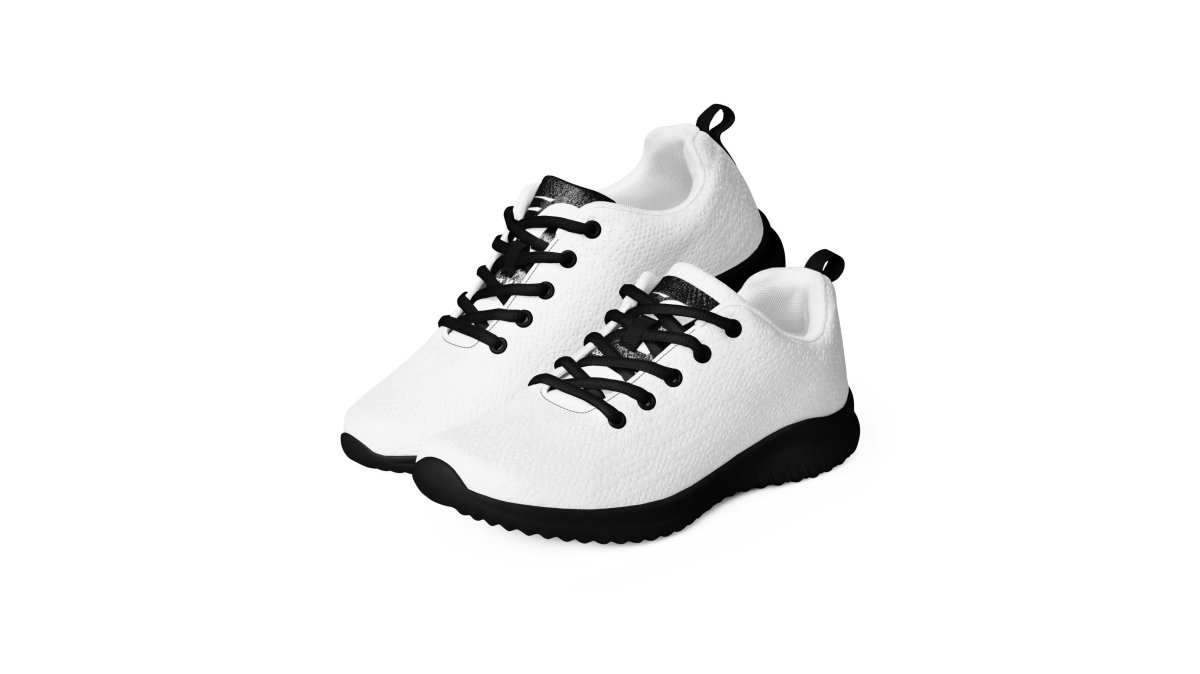
Our men's athletic shoes use a 100% polyester ultralight flyknit upper with a breathable lining, a soft insole, and a padded collar, all built on an EVA rubber outsole. They are $55.00.

Dress, Casual, and Boots
Dress shoes are formal footwear built on a slimmer last with a leather or faux-leather upper and a hard sole. Casual shoes sit between sneakers and dress shoes: think canvas, suede, or leather uppers with a flexible sole. Boots add ankle coverage and a lugged or stacked sole for weather and terrain.
For casual wear, our men's high top canvas shoes pair a 100% polyester canvas upper with a faux leather toe cap, padded collar, and EVA rubber outsole, priced at $55.00.

Hiking boots, hiking shoes, and backpacking boots belong in the outdoor footwear category. Mountaineering boots are a specialist purchase; if you need them, you already know why.
Men's Shoe Size and Fit: Measure Before You Buy
Men's shoe size and fit come down to four measurements: foot length, foot width, instep volume, and heel width. Get those right and most fit problems disappear before you order. A size chart only works if you know your own numbers first.
Measure at the end of the day, when your feet are at their largest.
For width, wrap a soft tape measure around the widest part of your forefoot (across the ball, just behind the toes) and note the circumference in centimeters.
Instep volume is the measurement most buyers skip.
Heel width matters for slip. If your heel lifts more than about a quarter inch when you walk, the shoe is either too long or too wide in the heel.
A common mistake is ordering your sneaker size for dress shoes or boots. Last shapes differ between categories, a dress shoe last is typically narrower and a boot last often runs longer, so confirm the size chart for each pair.
Break-in is part of fit. Leather and faux-leather uppers stretch slightly across the forefoot over the first week or two; canvas and knit uppers stretch very little.
Comfortable Men's Walking Shoes: What to Look For
Comfortable men's walking shoes share four traits: a cushioned midsole, a flexible forefoot, a breathable upper, and enough room in the toe box to let your toes splay.
Walking puts different demands on a shoe than running. You spend more time on your heel and roll through the whole foot, so heel cushioning and a smooth transition matter more than energy return.
Look for these features when you shop:
- A soft insole and padded collar to reduce pressure at the ankle
- A breathable lining so your feet stay dry on long days
- A rubber outsole with a textured pattern for grip on pavement
- A lace-up front for a secure, adjustable fit
- Matching-color soles and laces if you want a cleaner look
Men's Shoes for Work: Matching the Shoe to the Job
Men's shoes for work should match three things: the surface you stand on, the hours you stand on it, and whether the job carries a safety requirement. An office job and a warehouse job need different shoes, even if both leave you on your feet all day.
Use this decision framework before you buy:
| Job profile | Surface and hours | What to prioritize | Shoe type |
|---|---|---|---|
| Desk and meetings | Carpet or tile, mostly seated | Clean profile, all-day comfort | Dress or casual shoes |
| Retail and hospitality | Hard floors, 6-10 hours standing | Cushioned midsole, supportive insole, breathable upper | Casual shoes or low-profile sneakers |
| Warehouse and light industrial | Concrete, 8-12 hours, some walking | Cushioning plus a grippy outsole; check employer safety requirements | Work shoes or boots |
| Outdoor and trades | Uneven ground, weather exposure | Ankle support, lugged outsole, water resistance | Boots |
| Commute-heavy office | Pavement, 30-60 minutes walking each way | Heel cushioning, flexible forefoot, durable outsole | Walking-friendly sneakers or casual shoes |
For desk-to-street days, a clean casual shoe or low-profile sneaker covers meetings and commutes. For long standing hours on hard floors, prioritize cushioning and a supportive insole over style, a thin dress sole on concrete will feel flat by mid-afternoon. For outdoor or industrial work, boots with ankle support and a grippy outsole are the safer call, and if your employer requires safety-toe footwear, buy to that standard rather than adapting a fashion boot.
Rotating two pairs of work shoes extends the life of both. Moisture from a full day needs time to dry out, and wearing the same pair daily breaks down the midsole faster. On hard floors, replace work shoes when the midsole feels compressed or the outsole is worn smooth, usually sooner than the upper shows wear.
Materials, Construction, and What You Pay For
Materials and construction decide how long a shoe lasts and how it feels on day one. Price tracks materials, but not perfectly: you pay for the upper, the midsole, the outsole, and the labor behind the assembly.
Here is how the main materials compare:
| Material | Where It Appears | What It Does Well | Trade-off |
|---|---|---|---|
| Polyester flyknit | Athletic uppers | Lightweight, breathable | Less structure than leather |
| Canvas | Casual uppers | Durable, easy to clean | Limited water resistance |
| Faux leather | Toe caps, straps | Holds shape, wipes clean | Can crease over time |
| EVA rubber | Outsoles | Light, cushioned, stable | Wears faster than harder rubber |
| Polyurethane | Slides and casual soles | Lightweight, contoured | Spot clean only |
Construction details matter as much as the material list. A stitched upper perimeter, a padded collar, and a breathable lining all add comfort and lifespan. The footwear research community treats feature recommendations as level-specific, and the same logic applies to construction: a walking shoe and a lifting shoe should not be built the same way (footwear feature research).
Watch out: a strong glue smell is expected when you open the box. Air the shoes out for a couple of days and the smell will disappear.
Men's Shoe Care: Simple Habits That Add Years
Men's shoe care is mostly about moisture, dirt, and rotation. Handle those three and most pairs will outlast their expected life.
- Let shoes dry fully between wears. Stuff them with newspaper or use cedar inserts.
- Brush off dirt before it works into the seams.
- Spot clean canvas and faux leather with a damp cloth and mild soap.
- Air out athletic shoes after every workout instead of leaving them in a gym bag.
- Store pairs on a shelf, not stacked, so uppers keep their shape.
Suede and leather need a brush and a conditioner, but canvas and knit uppers need very little. Slides are spot clean only; do not machine wash them.
Build a Rotation That Covers Every Occasion
A rotation of three to four pairs covers nearly every occasion and extends the life of each pair. The goal is not a huge collection. It is the right styles in the right slots.
| Occasion | Shoe Type | What to Prioritize |
|---|---|---|
| Gym and workouts | Athletic shoes | Cushioning, stability, breathability |
| Office and meetings | Dress or casual shoes | Clean profile, leather or canvas upper |
| Weekends and errands | Sneakers or casual shoes | All-day comfort, easy care |
| Outdoor and weather | Boots | Ankle support, grippy outsole |
| Home and quick errands | Slides | Easy on and off, textured footbed |
Fill the gaps with what you actually wear. If you spend five days a week in a gym, two pairs of athletic shoes make more sense than one pair of dress shoes.
Our men's slides fill the easy slip-on slot: a cushioned faux leather strap, a lightweight polyurethane outsole, and a contoured, textured footbed, at $36.50.

The brands that grow fastest in footwear tend to keep an entrepreneurial edge as they scale, and a rotation works the same way: stay flexible, replace the worn pair, and add a category only when your week demands it (case study on retaining entrepreneurial spirit during hypergrowth).
Most men's shoes fail because they were bought for one occasion and worn for another. Build a rotation around your real week, measure your feet once, and match materials to the job.
At CYBORG WEAR, we build footwear and apparel for people who move between the gym and the street.
Frequently Asked Questions
How should men's shoes fit?
There should be roughly a thumb's width of space between your longest toe and the front of the shoe, and your heel should stay locked when you walk. Measure your feet at the end of the day, when they are at their largest, and check the size chart's foot length in centimeters rather than assuming your usual number. Width matters too: if the sides press against your foot, size up or look for a wider cut.
What are the most comfortable men's shoes for walking?
Look for a soft, padded insole, a breathable lining, and a rubber outsole that grips pavement. CYBORG WEAR's men's athletic shoes at $55.00 pair a soft insole and padded collar with an EVA rubber outsole. Skip stiff leather soles for long walks, and replace any pair once the midsole feels flat underfoot.
How can you make men's shoes last longer?
Rotate at least two pairs so each can dry out fully between wears, and let wet shoes air-dry away from direct heat. Wipe canvas and faux leather with a damp cloth, spot clean slides, and store shoes with cedar or paper to hold their shape. Men's shoe care comes down to small habits: clean before dirt sets in.
What is the difference between dress shoes and casual shoes?
Dress shoes have a slim profile, leather uppers, and a smooth sole built for formal settings. Casual shoes, including canvas high tops and sneakers, use softer uppers and rubber outsoles for everyday wear. If your week mixes both, a canvas high top at $55.00 suits casual wear.