 how-to
Why Fitness Rash Guards Chafe: Prevention & Fix Guide
Table of Contents
- Why Rash Guards Chafe During Workouts
- Rash Guard Fit for Workouts: Getting It Right
- Rash Guard Chafing Prevention: Practical Steps
- How to Treat Skin Chafing After Workouts
- Common Mistakes That Make Rash Guard Chafing Worse
- Conclusion
- Frequently Asked Questions
Last Updated: October 19, 2026
Why Rash Guards Chafe During Workouts
Rash guards are designed to protect your skin and wick moisture, but they can also cause irritation if something goes wrong, specifically, rash guard chafe can occur if friction, sweat, and fit combine poorly during intense activity.


At CYBORG WEAR, we've worked with active users to understand exactly why chafing happens and how to stop it.
Friction from Repetitive Motion and Skin Contact
Chafing begins with friction. When your body moves repeatedly against fabric, or skin rubs against skin, the constant rubbing breaks down the protective outer layer of skin.
Rash guards experience two types of friction:
- Skin-on-fabric friction: Your skin rubs directly against the inside of the rash guard. This is the most common source of chafing.
- Skin-on-skin friction: Areas where your body naturally folds or touches itself (armpits, inner thighs, chest) can chafe even under a rash guard if the fit is too tight or the fabric bunches.
The longer your workout, the more friction accumulates. A 30-minute session creates less chafing risk than a 90-minute endurance workout.
Seams matter too. Flat seams reduce friction compared to traditional stitched seams. When seams are poorly constructed or positioned directly over sensitive areas, they become hot spots for chafing.
Sweat, Heat, and Moisture Buildup
Sweat changes everything. Dry skin sliding against fabric has some natural friction protection. Wet skin loses that protection.
Heat amplifies the problem. Warm skin is more sensitive and irritates faster than cool skin.
Moisture also prevents your rash guard from moving smoothly. Wet fabric clings to your skin instead of gliding. This creates micro-movements and bunching that concentrate friction in specific spots rather than spreading it across the garment.
The combination of heat, sweat, and friction is why chafing often appears mid-workout or after 45 minutes of activity.
Seams, Fit, and Fabric Quality Issues
Not all rash guards are built the same. Three factors determine whether a rash guard will chafe:
Seam construction: Raised seams catch and pull on skin. Flatlock seams sit flush against fabric and move with your body instead of against it. Coverstitch seams (stitching on both sides of the seam) add durability and reduce friction.
Fabric quality: Cheap polyester is rough and absorbs sweat slowly, keeping moisture against your skin longer. Higher-quality fabrics like those used in CYBORG WEAR rash guards (82% polyester, 18% spandex) are smoother, dry faster, and stretch evenly without bunching.
Fit: A rash guard that's too tight restricts movement and concentrates pressure on specific areas. One that's too loose bunches and creates friction through constant shifting. The sweet spot is a fitted cut that moves with your body without restricting it.
Rash Guard Fit for Workouts: Getting It Right
The most common rash guard chafe complaint comes from poor fit. A rash guard can have perfect seams and premium fabric, but if it doesn't fit correctly, it will chafe.

How Tight Is Too Tight
A fitted rash guard should feel snug but not restrictive. You should be able to breathe deeply without feeling squeezed. If you can't raise your arms fully or bend forward without the fabric pulling, it's too tight.
Signs your rash guard is too tight:
- Seams dig into your skin or leave marks after removal
- You feel constant pressure on your chest, shoulders, or underarms
- The fabric bunches at the armpits or creates horizontal creases
- You can't take a full breath during exercise
- Sweat pools in wrinkles instead of being wicked away evenly
Tight rash guards concentrate friction in high-movement areas. Your shoulders, underarms, and chest work harder during workouts, so a tight fit creates more chafing in these zones.
Check the size guide before ordering. Measure yourself accurately, don't guess based on your usual clothing size. Brands fit differently.
How Loose Is Too Loose
A rash guard that's too loose moves independently of your body. As you exercise, the fabric shifts and creates friction through constant rubbing and bunching.
Signs your rash guard is too loose:
- The neckline gaps away from your neck
- Fabric bunches at the sides or back
- The hem rides up during movement
- You feel the fabric sliding against your skin instead of moving with it
- Sweat pools in loose areas instead of being wicked evenly
Loose rash guards also fail at their core job: protecting your skin. If the fabric moves separately from your body, it can't provide consistent moisture-wicking or sun protection.
The ideal fit is snug enough to move with your body but loose enough to allow full range of motion.
Rash Guard Chafing Prevention: Practical Steps
Preventing chafing is easier than treating it. These steps address the root causes: friction, moisture, and fit.
Choose the Right Fabric and Seam Construction
Start with quality construction. Look for rash guards with:
All-over print men’s rash guard →
- Flatlock seams: These sit flush against the fabric instead of creating raised ridges that catch and pull on skin.
- Four-way stretch fabric: Fabric that stretches in all directions moves with your body instead of bunching or restricting movement. CYBORG WEAR rash guards use polyester-spandex blends that stretch and recover evenly.
- Smooth, moisture-wicking material: Rough fabrics irritate skin faster. Premium polyester dries quickly and doesn't cling when wet.
- Proper weight: Fabric that's too thin tears easily and doesn't wick moisture well. Fabric that's too heavy stays wet and restricts movement. CYBORG WEAR uses 6.78-7.52 oz/yd² fabric weight, heavy enough to be durable but light enough to dry quickly.
The American Academy of Dermatology recommends moisture-wicking fabrics for active wear because they reduce the time sweat stays against your skin, lowering irritation risk.
Manage Moisture Before and During Exercise
Sweat is unavoidable during workouts, but you can reduce its impact:
- Start dry: Wear a clean, dry rash guard. Damp fabric from storage or washing increases chafing risk immediately.
- Apply a barrier product: Anti-chafe balms, creams, and lubricants create a protective layer between skin and fabric. Apply these to known friction points before your workout.
- Change out of wet gear quickly: Prolonged sweat exposure irritates skin. If you have time between workouts, change into dry clothes within 30 minutes.
- Choose quick-drying fabrics: Rash guards made from polyester-spandex blends dry faster than cotton or wool blends.
During longer workouts (over 60 minutes), consider taking a brief break to towel off if possible. This removes excess sweat and gives your skin a chance to cool.
Apply Protective Barriers
Anti-chafe products create a slippery layer between your skin and fabric, reducing friction significantly. These work best when applied before your workout starts, not after chafing has begun.
Common protective barrier options:
- Anti-chafe balms: Thick, waxy products that stay in place through sweat and movement. Best for known hot spots like underarms or seams.
- Lubricating creams: Lighter products that absorb into skin gradually. Good for larger areas like the chest or back.
- Powder-based products: Absorb sweat and reduce moisture buildup. Less effective than balms for active wear because they wash away with sweat.
Apply these products sparingly, a little goes a long way. Too much product can make your rash guard slippery and uncomfortable.
How to Treat Skin Chafing After Workouts
If chafing happens despite prevention, treat it promptly to avoid infection and speed healing.
Immediate Care for Irritated Skin
Stop the irritation first:
- Remove the rash guard immediately after your workout. Continuing to wear wet, chafing fabric worsens irritation.
- Rinse the area with cool water. This removes sweat and bacteria and cools inflamed skin.
- Pat dry gently. Don't rub, use a soft cloth and blot instead.
- Apply a soothing product. Moisturizing creams, aloe vera, or hydrocortisone cream (1%) reduce inflammation and speed healing. Avoid petroleum jelly on active chafing, it traps moisture.
Over the next few days:
- Keep the area clean and dry. Wash gently with mild soap and water.
- Wear loose, soft clothing. Avoid tight fabrics or seams over the irritated area.
- Avoid further friction. Skip workouts that target the affected area until it heals.
- Reapply soothing products 2-3 times daily until redness fades.
Most mild chafing heals within 3-5 days with proper care.
When to Seek Medical Attention
Chafing usually resolves on its own, but certain signs indicate you should see a healthcare provider:
- Severe blistering: Large, fluid-filled blisters that don't improve with home care
- Signs of infection: Increasing redness, warmth, pus, or swelling after 3 days
- Spreading rash: Irritation that spreads beyond the original chafed area
- Persistent pain: Pain that doesn't decrease after 5 days of treatment
- Open wounds: Deep abrasions or bleeding that won't stop
A dermatologist can prescribe stronger anti-inflammatory creams or antibiotics if infection develops. They can also help identify if the irritation is chafing or a different skin condition.
Common Mistakes That Make Rash Guard Chafing Worse
These habits turn minor irritation into serious chafing:
Wearing a rash guard that's the wrong size. Too tight concentrates friction; too loose creates shifting and bunching. Check the size guide carefully and measure yourself.
Skipping the break-in period. New rash guards sometimes have stiff seams or rough fabric.
Ignoring seam quality. Cheap rash guards use raised seams that catch on skin. Invest in quality construction with flatlock or coverstitch seams.
Applying anti-chafe products incorrectly. Too little product won't protect; too much makes your rash guard slippery. Apply a thin, even layer to friction points.
Continuing to exercise through chafing pain. Pain is a signal that damage is happening.
Washing your rash guard incorrectly. Hot water, harsh detergents, and the dryer damage fabric and seams.
Conclusion
Rash guard chafing comes from friction, moisture, and fit, all controllable factors. Choose a rash guard with quality seams and moisture-wicking fabric, ensure it fits snugly without restricting movement, and manage sweat before and during your workout. Most chafing is preventable with the right approach.
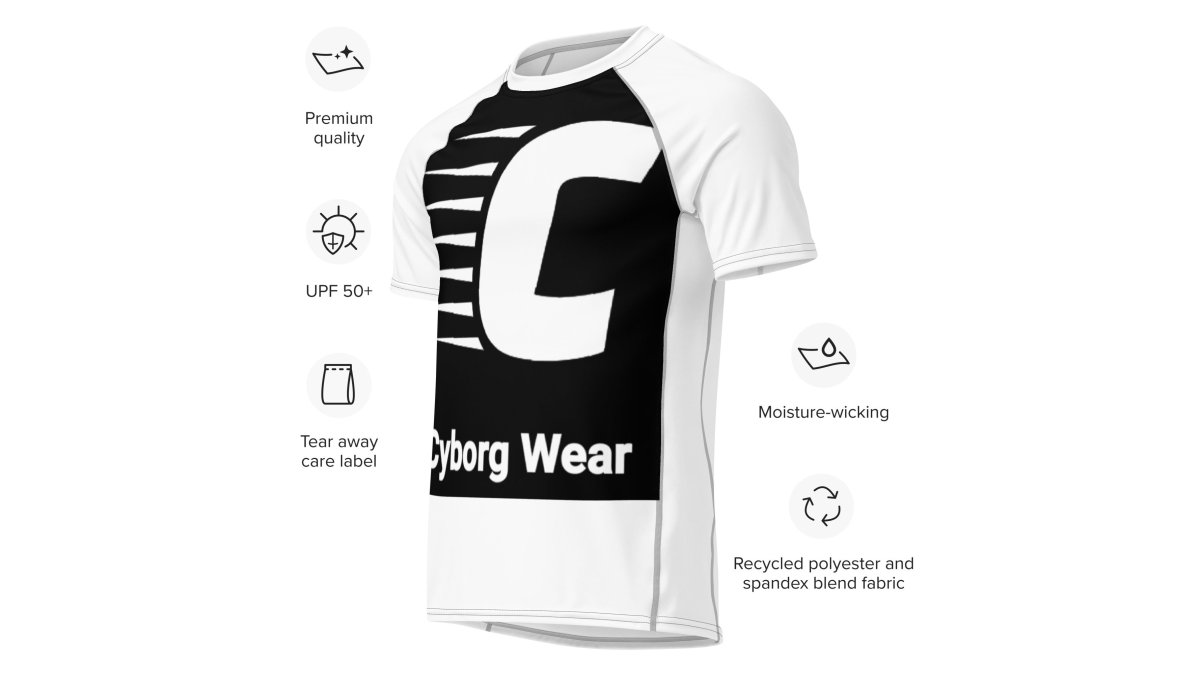
When you're ready to upgrade your rash guard, CYBORG WEAR offers options designed specifically for active workouts. Our All-over print men's rash guard features flatlock seams, four-way stretch polyester-spandex fabric, and moisture-wicking construction at $46.50. For women, our Women's Rash Guard combines the same quality construction with a fitted design and UPF 50+ protection at $44.50.
Frequently Asked Questions
Why does my rash guard chafe during a workout?
Rash guards chafe when friction from repetitive motion, sweat buildup, and heat create irritation where fabric contacts skin. Tight fits that don't allow movement, poor seam construction, and moisture trapped against your body all contribute. Low-quality fabrics that lack breathability or four-way stretch worsen the problem. Skin-on-skin friction in areas like underarms and torso, combined with clothing-on-skin rubbing, intensifies discomfort during active exercise.
How can I prevent chafing under a rash guard?
Choose a rash guard with flat ergonomic seams and four-way stretch fabric that moves with your body. Ensure proper fit: snug enough to stay in place but loose enough to allow full range of motion. Keep skin dry by applying moisture-wicking layers underneath and pat yourself dry during breaks. Use anti-chafe balm or lubricant on high-friction areas before workouts. Wash and dry your rash guard properly to maintain fabric integrity and breathability after each use.
Can a rash guard that is too tight cause chafing?
Yes, an overly tight rash guard restricts movement and creates constant friction against skin. Tight seams dig in, moisture gets trapped, and the fabric can't breathe properly, accelerating sweat and heat buildup. This combination causes rapid skin irritation. A properly fitted rash guard should feel snug without restricting your range of motion. If you can't move your arms freely or the fabric pulls at your torso, the fit is too tight.
What should I do if a rash guard has already caused chafing?
Rinse the affected area with cool water and pat dry gently. Apply a soothing balm or moisturizer to reduce soreness and redness. Avoid wearing the same rash guard immediately; let skin recover for a day or two. If irritation persists beyond a few days, becomes increasingly painful, or shows signs of infection (pus, warmth, swelling), stop wearing the garment and consult a healthcare provider. When you return to that rash guard, adjust the fit or add a moisture-wicking base layer to prevent recurrence.