 how-to
Why Do Gym Leggings Chafe? 7 Fixes That Stop the Rub
Table of Contents
- Why Do Gym Leggings Chafe? The Real Physics of the Rub
- The 4 Main Culprits: Friction, Moisture, Seams, and Fit
- How to Prevent Inner Thigh Chafing: 5 Tactics That Work
- Why the Best Seamless Leggings for Workouts Beat Stitched Options
- Anti-Chafing Balm for Runners: What to Apply Before You Train
- Post-Chafing Recovery: How to Heal Skin Fast
- Your Chafe-Free Legging Checklist
- Conclusion: Stop the Rub Before It Starts
- Frequently Asked Questions
Last Updated: September 6, 2026
Why Do Gym Leggings Chafe? The Real Physics of the Rub
Gym leggings chafe because of a simple mechanical failure: friction between fabric and skin, amplified by moisture and poor fitment. When your leggings can't manage sweat and the fabric shifts against your skin repeatedly, the top layer of skin erodes, leading to redness, rawness, and sometimes skin maceration. The root cause usually isn't the workout itself, but the construction of the garment.
The chafing equation has three inputs: friction, moisture, and movement. Synthetic fibers like polyester and spandex are standard in performance wear because they dry quickly, but when a fabric loses its elasticity or its moisture-wicking finish degrades, it clings to wet skin and creates drag. That drag, repeated over hundreds of strides or squat reps, is what turns a good session into a painful one.

The 4 Main Culprits: Friction, Moisture, Seams, and Fit
Chafing isn't a single problem. It's four separate issues that often stack on top of each other.
1. Friction and skin-on-skin contact. When your thighs rub together during a run or a set of lunges, the fabric between them becomes a sandpaper-like layer. This is especially common in the inner thigh area, where skin-on-skin contact is constant during high-impact exercise.
2. Moisture and sweat accumulation. Sweat breaks down the skin barrier, making it softer and more vulnerable to damage (peer-reviewed research). Fabric that holds sweat against the skin accelerates this process, leading to a condition called skin maceration, where the skin becomes white, wrinkled, and highly prone to tearing.
3. Seam irritation and seam placement. Thick, raised seams that sit directly on high-friction zones act like saw blades on every rep. The crotch area and inner thigh are the most common spots for seam irritation, especially when the seam placement doesn't match your anatomy.
4. Poor fitment and fabric weight. Leggings that are too loose create excess fabric that bunches and rubs. Leggings that are too tight compress the skin and trap moisture. The right fitment should feel like a second skin with no loose material and no digging waistband.
Fabric Failure: When Synthetic Fibers Stop Working
Most performance leggings start with excellent moisture-wicking properties. The problem is that these finishes don't last forever. After repeated washes, the hydrophobic treatment that pushes sweat away from your skin degrades, and the fabric starts absorbing moisture instead of repelling it.
Fabric pilling is another sign of degradation. When tiny balls of fiber form on the surface, they increase friction dramatically. If your leggings are pilling in the inner thigh area, they will chafe no matter what balm you apply. The elasticity of the spandex also breaks down over time, meaning the compression that kept the fabric in place is gone, and the leggings start shifting with every stride.
Seam Placement and Crotch Gusset Design
Seams are the most overlooked cause of chafing. A flatlock seam is fine on the outer leg, but a bulky seam running along the inner thigh is a recipe for disaster. The crotch gusset matters just as much. A well-designed gusset, which is the diamond-shaped panel in the crotch, allows for natural movement and reduces stress on the seams. Leggings without a proper gusset force the fabric to pull and twist, creating friction exactly where you don't want it.
How to Prevent Inner Thigh Chafing: 5 Tactics That Work
Preventing inner thigh chafing comes down to five proven tactics. These work whether you're a marathon runner, a weightlifter, or a yoga enthusiast.
-
Choose the right fabric. Look for leggings made with moisture-wicking synthetic fibers like polyester and spandex blends. Avoid cotton, which absorbs sweat and holds it against your skin. A fabric weight around 200-230 g/m² offers a good balance of durability and breathability (aatcc.org).
-
Get the fit right. Your leggings should be snug but not restrictive. Pay attention to the waistband, which should stay put during squats and bends without digging in. If you're between sizes, size up for comfort rather than squeezing into a smaller pair.
-
Apply an anti-chafing balm before you train. This is non-negotiable for long sessions. A dedicated anti-chafing balm creates a protective barrier between your skin and the fabric, reducing friction even when you're soaked in sweat.
-
Layer strategically in cold weather. When you add a base layer under your leggings, choose one with flat seams and a snug fit. The wrong base layer introduces new friction points, so test the combination before a long workout.
-
Keep your skin dry. Use talc-free powder on your inner thighs before training if you sweat heavily. Managing moisture is as important as managing friction.
| Tactic | What It Does | Best For |
|---|---|---|
| Moisture-wicking fabric | Moves sweat away from skin | All workouts |
| Proper fitment | Prevents fabric bunching | High-impact exercise |
| Anti-chafing balm | Reduces friction on skin | Long runs, cycling |
| Strategic layering | Adds warmth without rub | Cold-weather training |
| Powder application | Keeps skin dry | Heavy sweaters |
Why the Best Seamless Leggings for Workouts Beat Stitched Options
Seamless leggings are often positioned as the definitive answer to chafing, and for many athletes, they are. But the reality is more nuanced. Seamless construction eliminates certain friction points while introducing trade-offs that matter depending on your body type and workout style.
The Case for Seamless: What It Actually Eliminates
Seamless leggings are knit on a circular knitting machine as a single tube, which means there are no side seams, no inner thigh seams, and no crotch seam. For people who experience chafing directly on the inner thigh or along the crotch line, this is a game-changer. A raised seam in those zones acts like a saw blade on every stride, and removing it eliminates the problem at the source.
Seamless construction also allows for zoned knitting. The fabric density can be engineered to be more breathable in the crotch and under the knees, and more compressive in the glutes and thighs. This targeted structure helps manage sweat where you need it most and keeps the fabric anchored during explosive movements.
The Trade-Off: Compression and Support
Seamless leggings are not automatically better for every workout. Because they are knit as a single piece, they typically offer uniform or graduated compression that is less customizable than stitched garments. For heavy strength training, a stitched legging with a separate waistband panel often provides better core support and a more secure hold. The waistband on a seamless legging can roll down during deep squats if the knit tension is not calibrated for your waist-to-hip ratio.
Anatomical Variations: Why One Design Does Not Fit All
Most articles treat "chafing" as a single problem, but there are two distinct types that affect different bodies differently:
Thigh chafing occurs when the inner thighs rub together during movement. This is more common in bodies with a wider hip-to-thigh ratio, curvier builds, or higher body fat percentages. For these athletes, seamless leggings are often the best choice because they remove the inner thigh seam that sits directly in the friction zone.
Crotch chafing occurs when the fabric pulls taut across the pelvic area, creating pressure and friction against the vulva or the crease where the thigh meets the pelvis. This is more common in athletes with a narrower pelvis, higher hip bones, or a shorter torso-to-leg ratio. For crotch chafing, a seamless legging without a gusset can actually make things worse, because the fabric has no give in that zone and pulls tight with every hip extension.
The Gusset Question: Seamless Does Not Mean Gusset-Free
A gusset is a diamond-shaped or triangular panel inserted into the crotch area to allow for natural hip rotation and to reduce fabric stress. In stitched leggings, a well-designed gusset is the gold standard for mobility. In seamless leggings, there is no gusset by definition, because the garment is knit in one piece. Instead, the knit pattern itself must provide the necessary stretch in the crotch zone. Some seamless leggings achieve this with a specialized knit structure; others do not, and they end up pulling taut across the crotch during squats, lunges, or cycling.
How to Choose Based on Your Body and Workout
| Your Situation | Better Choice | Why |
|---|---|---|
| Inner thigh chafing, curvy or athletic build | Seamless | No inner thigh seam to irritate |
| Crotch chafing, narrow pelvis or high hip bones | Stitched with a triangle gusset | Gusset allows natural movement without fabric pull |
| Heavy strength training (squats, deadlifts) | Stitched with a separate waistband | Better core support and waistband security |
| Long-distance running or cycling | Seamless with zoned breathability | Fewer friction points over repetitive motion |
| Hot yoga or high-sweat sessions | Seamless with open-knit crotch zone | Enhanced moisture management in high-sweat areas |
The bottom line: seamless leggings are not universally superior. They are superior for eliminating thigh seam friction, but they can introduce crotch tension for certain anatomies. Identify which type of chafing you actually experience, then choose the construction that addresses that specific friction point. For athletes who want the best of both worlds, some premium brands now offer seamless leggings with a bonded or welded gusset, which provides the mobility of a gusset without the raised seam.

Anti-Chafing Balm for Runners: What to Apply Before You Train
Anti-chafing balm for runners is a lubricant that reduces friction between skin and fabric. The best products create a long-lasting barrier that doesn't wash away with sweat. They typically contain ingredients like petrolatum, dimethicone, or natural waxes that coat the skin and allow fabric to glide smoothly over it.
Apply the balm to your inner thighs, groin area, and anywhere else you experience friction, at least five minutes before you dress (acsm.org). This gives the product time to absorb and form a protective film. Reapply for sessions lasting over two hours or in extreme heat.
A chafing stick is the most convenient format for runners because it applies cleanly without getting your hands messy. Look for a stick that is fragrance-free and non-comedogenic, meaning it won't clog pores. For cyclists, a thicker cream or balm tends to last longer against the constant rubbing of the saddle.

Post-Chafing Recovery: How to Heal Skin Fast
If you're already chafed, stop training and address the skin immediately. Continuing to exercise on raw skin opens the door to infection and prolongs the healing process.
Clean the area gently. Wash with mild soap and cool water to remove sweat and any residual balm. Pat dry with a clean towel, never rub.
Apply a healing ointment. A product containing petrolatum or zinc oxide creates a protective barrier that allows the skin to regenerate. Avoid alcohol-based products, which sting and dry out the skin further.
Let it breathe. Wear loose, breathable clothing for 24 to 48 hours. Tight leggings will re-irritate the area and delay healing.
Moisturize once the skin has closed. Once the raw feeling subsides, apply a gentle moisturizer to restore the skin barrier.
Your Chafe-Free Legging Checklist
Before you buy your next pair of leggings, run through this checklist.
- Fabric: Is it at least 80% synthetic (polyester, nylon, or recycled polyester) with spandex or elastane for stretch?
- Moisture-wicking: Does the brand specify moisture-wicking or quick-dry properties?
- Seams: Are the seams flatlock or is the garment seamless? Are there seams running along the inner thigh?
- Gusset: Is there a crotch gusset? A triangle gusset is the gold standard for mobility.
- Waistband: Will the raised waistband stay in place without rolling or digging in?
- Compression: Does the fabric offer mild compression that holds everything in place without restricting movement?
- Fabric weight: Is the fabric substantial enough (around 230 g/m²) to avoid transparency and provide durability?
Conclusion: Stop the Rub Before It Starts
Gym leggings chafe because of friction, moisture, seams, and fit, but every one of those causes has a fix. Choose leggings with seamless construction or flatlock seams, a proper crotch gusset, and moisture-wicking synthetic fabric. Apply an anti-chafing balm before long sessions, and let any existing irritation heal completely before you train again.
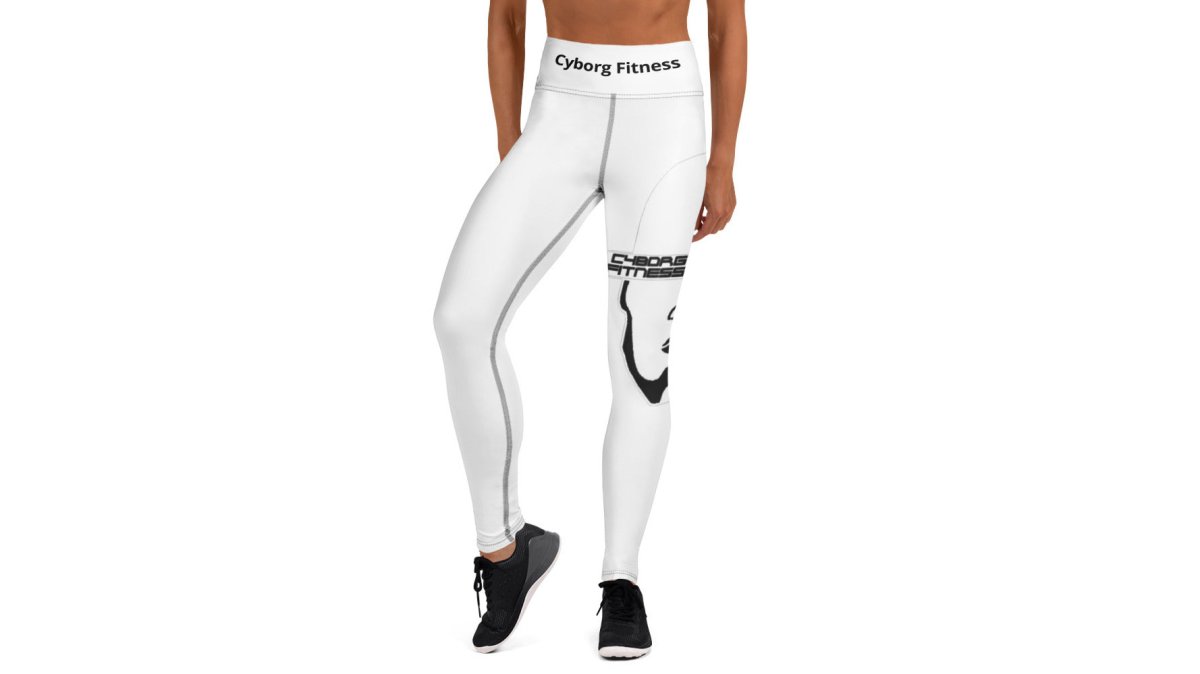
At CYBORG WEAR, we build our leggings with these principles in mind. Our yoga leggings use a four-way stretch polyester-spandex blend with a raised waistband, while our leggings with pockets offer mild compression and a high-waisted cut for a secure fit.

Get started with CYBORG WEAR and train without the rub.
Frequently Asked Questions
Why do my leggings chafe between my thighs?
Chafing between your thighs happens when skin-on-skin contact combines with sweat accumulation and friction from your leggings. The salt from sweat crystallizes and acts like sandpaper against your skin barrier. Fabric composition matters too: cheap polyester blends without moisture-wicking technology trap sweat against your skin, increasing skin maceration and irritation. A proper crotch gusset and flatlock seams reduce the rubbing, while a high-waisted, compression fit keeps fabric stable so it doesn't shift and create friction points during high-impact exercise.
Are seamless leggings better for preventing chafing?
Yes, seamless leggings are generally better for preventing chafing because they eliminate seam irritation entirely. Traditional leggings have raised seams along the inner thigh that rub against your skin with every stride. Seamless construction removes those friction points, which is why the best seamless leggings for workouts are so popular with runners and cyclists. Look for a pair with a four-way stretch fabric that moves with your body. CYBORG WEAR's Yoga Leggings use a smooth microfiber yarn.
What is the best way to prevent thigh rub during high-intensity workouts?
The best defense is a three-part system. First, wear high-waisted leggings with mild compression so the fabric stays put without digging in. Second, apply an anti-chafing balm for runners to your inner thighs before you train; these create a protective barrier that reduces friction even when sweat builds up. Third, choose moisture-wicking fabric like the 74% recycled polyester blend in CYBORG WEAR's Crossover Leggings, which pulls sweat away from your skin so salt doesn't accumulate. Skip cotton blends entirely, as they hold moisture and make chafing worse.