 ultimate-guide
Do All-Over Print Rash Guards Fade? What to Know
Table of Contents
- Do All-Over Print Rash Guards Fade? The Short Answer
- Why Prints Fail: Chemical vs. Mechanical Fading
- Sublimation vs. Screen Printing for Athletic Wear
- How to Wash Rash Guards to Prevent Fading
- Fabric GSM and Print Integrity: What to Look For
- Best Moisture-Wicking Rash Guards for Women and Men
- Final Word on Rash Guard Longevity
- Frequently Asked Questions
Last Updated: September 9, 2026
Do All-Over Print Rash Guards Fade? The Short Answer
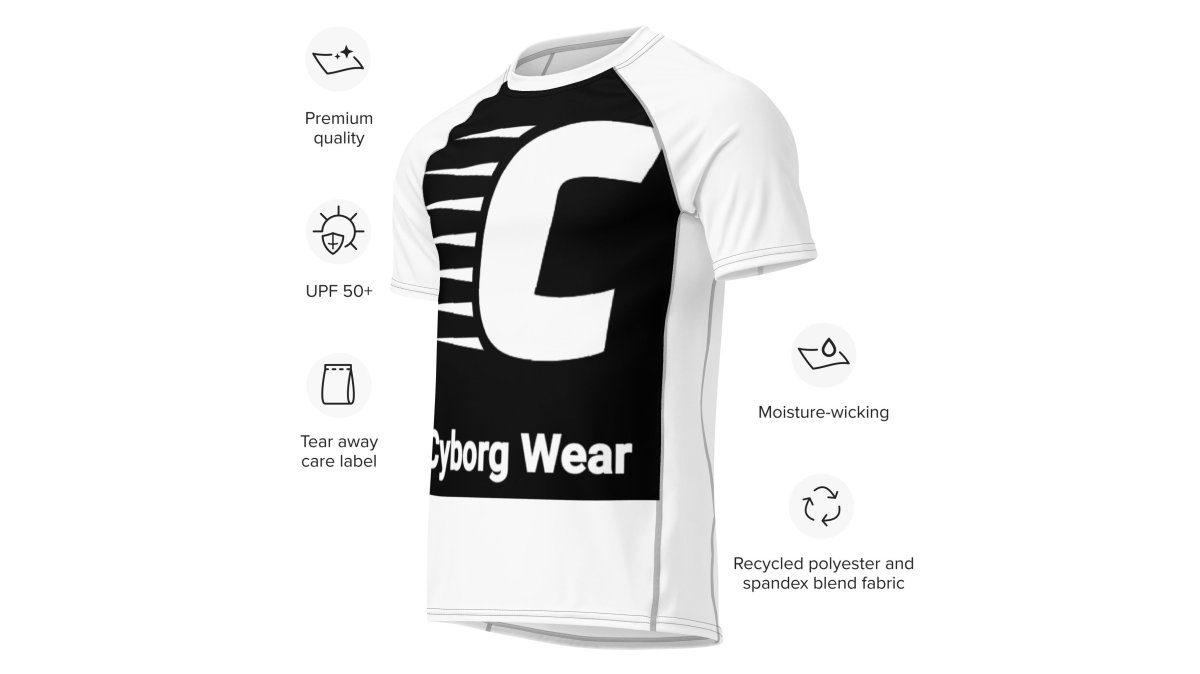
No, quality all-over print rash guards should not fade noticeably under normal use, because the design is dyed into the fabric rather than printed on top of it. Dye sublimation bonds ink with polyester fibers at a molecular level, making the print part of the fabric itself. At CYBORG WEAR, we build our rash guards around this method, which is why the bold graphics on our all-over print men's rash guard stay vivid through countless workouts and wash cycles.

That said, fading can still happen if the garment is mistreated or if the base fabric is low quality. The short answer is that rash guards fade when they are made with weak dye saturation or when owners ignore basic care rules. Below, we show you how to tell the difference between a print that will last and one that will look cheap after a few weeks, and cover the two distinct ways prints break down.
Why Prints Fail: Chemical vs. Mechanical Fading
Most people assume all fading is the same, but there are two separate failure modes, each requiring a different prevention strategy. Chemical fading happens when UV radiation or chlorine breaks down dye bonds in the polyester, lightening color evenly across the garment. Mechanical fading is the physical breakdown of the fabric surface, showing up as pilling, cracking, or a chalky white haze that makes the print look washed out even though the dye is intact.
The distinction matters because it changes how you shop. A rash guard with excellent dye saturation can still look terrible if the fabric pills, while a mechanically sound fabric will look dull if the ink migration was poor during manufacturing. The FTC's textile care guidance emphasizes that proper labeling and fiber content directly affect how consumers should maintain garments, which is why checking the fabric blend before you buy is the first line of defense.
UV Exposure Impact on Print Vibrancy
Sunlight is the single biggest enemy of print longevity, and the damage compounds over time. UV degradation breaks the chemical bonds in sublimation dyes, and because the ink is embedded in the fiber, the fading happens from the inside out. Leaving a rash guard in direct sun for hours accelerates this process far faster than any washing machine.
The practical fix is simple: dry your rash guards indoors, out of direct sunlight, and never leave them in a hot car. When you are actually wearing the garment at the beach or on a run, the UV exposure is unavoidable, but the fabric is against your skin and the print is protected by the garment's own surface layer.

Sublimation vs. Screen Printing for Athletic Wear
The debate between sublimation and screen printing is about which method survives the physical demands of a stretchy, sweat-soaked, chlorine-exposed garment. Sublimation ink turns into a gas at roughly 400°F and bonds with polyester polymer chains, becoming part of the fiber itself. Screen printing deposits a layer of plastisol or water-based ink on the surface, where it cures into a film on top of the fabric.
That surface film is the fundamental problem for athletic wear. A rash guard is typically 80-90% polyester blended with 10-20% spandex for four-way stretch. When you pull a screen-printed garment over your head, the fabric stretches but the cured ink film does not, causing micro-cracking along stress points, shoulders, underarms, and the hem, that appears as fine white lines widening into flakes over time. This is mechanical failure of the ink layer, not fading.
Sublimation avoids this entirely because there is no surface layer to crack. The dye molecules are embedded inside the polyester fibers, so when the fabric stretches, the dye moves with it. The print remains continuous and vivid because it is the color of the fiber itself. This is why you will never see a screen-printed rash guard from a serious water sports brand.
There is also a breathability argument. Screen printing seals the surface pores of the fabric, blocking the moisture-wicking channels that move sweat away from the skin. A rash guard 30% covered in screen-printed ink loses a corresponding percentage of its evaporative surface area. Sublimation leaves the knit structure open, so moisture-wicking continues to work across 100% of the garment.
Screen printing still makes sense on cotton or cotton-blend garments that do not stretch or need to wick, since cotton fibers are poor hosts for sublimation dye. But for a rash guard engineered for compression and sweat management, sublimation is the only option that does not compromise the fabric's core functions.
A useful test when shopping: stretch the fabric firmly between both hands and look at the printed area. If you see any lightening or whitening of the ink under tension, that is a sign of a surface-applied print that will degrade with use. A true sublimated print will not change appearance under stretch because the color is inside the fibers, not on top of them.

How to Wash Rash Guards to Prevent Fading
Washing is where most rash guards meet an early demise, and the mistakes are entirely preventable. The most common error is using hot water or a high-heat dryer, which breaks down elastane fibers and accelerates dye migration. Cold water is non-negotiable, and air drying is always safer than machine drying.
Sublimation dyes are dispersed particles trapped inside the polyester polymer. Heat provides energy that allows those particles to migrate toward the fiber surface over time, a process called thermal migration. Every trip through a hot dryer pushes more dye toward the surface, where it is vulnerable to abrasion and chemical attack. A 140°F dryer cycle does more damage to print saturation than fifty cold-water washes.
Water hardness is another factor most care guides ignore. Hard water, common in the Midwest and Southwest, contains calcium and magnesium ions that bind to detergent residues and leave a film on the fabric surface, scattering light and making the print look hazy even though the dye is intact. If you live in a hard-water area, add a half-cup of white vinegar to the rinse cycle once a month; the acetic acid dissolves the film without attacking the polyester or dye.
Chlorine is the other chemical threat. Pool chlorine is an oxidizing agent that breaks chromophore bonds in sublimation dyes, causing gradual lightening most visible in reds and blues. The fix is not to avoid pools but to rinse the garment in fresh water immediately after swimming. Chlorine that dries into the fabric concentrates as water evaporates, doing far more damage than diluted pool water.
Follow these steps to keep the print vibrant for years:
- Turn the rash guard inside out before washing to protect the outer print surface from abrasion against other garments.
- Use cold water (below 80°F) on a gentle cycle with a mild liquid detergent. Avoid powders, which can scratch the fiber surface, and avoid detergents with optical brighteners, which can leave a fluorescent residue on polyester.
- Never use fabric softener or bleach. Fabric softener coats the polyester fibers with a cationic surfactant film that blocks moisture-wicking, while bleach attacks the dye bonds directly. Chlorine bleach is the worst offender; oxygen bleach is less damaging but still unnecessary.
- Air dry flat or hang indoors, away from direct sunlight. Skip the dryer entirely, as the heat and tumbling cause both mechanical pilling and thermal stress on the elastane.
- Wash with similar colors and avoid overloading the machine, which increases friction between garments.
The single best habit is turning the garment inside out before every wash. This one step reduces surface abrasion dramatically and is the difference between a print that looks new after fifty cycles and one that looks faded after ten. The American Cleaning Institute's fabric care resources offers general guidance on detergent selection and water temperature that applies directly to performance synthetics.
Fabric GSM and Print Integrity: What to Look For
Fabric weight, measured in grams per square meter (GSM), is a strong predictor of how well a rash guard will hold its print. A heavier fabric, typically 200 GSM and above, provides a denser surface for sublimation ink to saturate, meaning deeper color penetration and better abrasion resistance. Lighter fabrics around 150 GSM are more prone to fibers shifting and pilling, which degrades the print surface faster.
A common mistake is assuming all polyester blends perform the same. The spandex or elastane content matters as much as the base polyester, because it determines how the fabric recovers from stretching. Too much spandex can distort the print over time, while too little makes the garment baggy and prone to friction. Our all-over print men's rash guard uses an 81% recycled polyester and 19% spandex Lycra blend in the US market, balancing stretch recovery with a dense enough polyester base for deep ink saturation.
When you are shopping, check the listed GSM and the spandex percentage. If a brand does not publish either number, that is a red flag, because it suggests they are not confident in the fabric's performance. The American Association of Textile Chemists and Colorists standards publishes test methods for colorfastness and abrasion resistance that reputable manufacturers use to validate their garments before they reach the market.
Best Moisture-Wicking Rash Guards for Women and Men
The best moisture-wicking rash guards for women and men share three traits: a recycled polyester base for sustainability and wicking, a spandex blend for stretch and recovery, and flatlock seams to prevent chafing. The moisture-wicking function only works if the fabric stays clean, which is why the care routine above matters as much as the initial fabric choice.
For most athletes, a fabric weight around 230 g/m² hits the sweet spot between durability and breathability. It is heavy enough to hold a vibrant all-over print without looking washed out, yet light enough for training, surfing, or cycling without overheating. Flatlock seams are another non-negotiable, as they lie flat against the skin and prevent friction that causes chafing and mechanical wear.
CYBORG WEAR builds its rash guards with 88% recycled polyester and 12% elastane in the EU market, and 81% recycled polyester with 19% spandex Lycra in the US. Both blends wick moisture away from the skin while keeping the all-over print saturated and sharp. If you want a garment that transitions from the gym to the beach without losing its edge, the all-over print men's rash guard is built for that dual purpose.
Final Word on Rash Guard Longevity
The honest truth is that all-over print rash guards will fade if you buy cheap fabric or ignore basic care, but a quality garment with proper sublimation printing will outlast your training cycle. The difference between a rash guard that looks new after a year and one that looks faded after a month comes down to three factors: the density of the polyester base, the quality of the dye saturation, and how you wash and dry it.
We have covered the mechanics of chemical versus mechanical fading, why sublimation beats screen printing for stretchy athletic wear, and the washing habits that protect your print. The throughline is simple: buy a rash guard with a dense enough fabric to hold the dye, and treat it with cold water and air drying.
Frequently Asked Questions
How long do all-over print rash guards last before fading?
With proper care, a quality sublimated rash guard should maintain its color for years. The print doesn't sit on the surface, so it won't crack or peel. Fading typically happens slowly due to UV exposure and improper washing. Using cold water, mild detergent, and air drying will significantly extend the life of the vibrant design.
What is the difference between sublimation and screen printing on rash guards?
Screen printing lays ink on top of the fabric, which can crack and peel, especially on stretchy materials. Dye sublimation uses heat to turn dye into gas that bonds with polyester fibers at a molecular level. This means the print becomes part of the fabric, stretching with it and resisting fading and abrasion.
Does chlorine affect the print quality of athletic rash guards?
Yes, chlorine can degrade the elastane or spandex fibers in your rash guard over time, which affects the overall fabric integrity and can make colors look dull. While the sublimated print itself is resistant, the fabric breakdown can cause a faded appearance. Rinse your rash guard in cold, fresh water immediately after swimming to remove chlorine and prolong its life.
How should I wash my performance rash guard to preserve the print?
Always turn your rash guard inside out before washing. Use cold water on a gentle cycle with a mild, bleach-free detergent. Avoid fabric softeners as they can coat the fibers and reduce moisture-wicking. Never wring it out. Hang it to dry in a shaded area, away from direct sunlight, to protect the print from UV fading.
The challenge with rash guards is not finding one with a print you like, it is finding one that still looks good after fifty washes. CYBORG WEAR solves this with recycled polyester blends, flatlock seams, and true dye sublimation that bonds the print into the fiber rather than laying it on top. Our all-over print designs are built for athletes who train hard and expect their gear to keep up. Get started with CYBORG WEAR and experience a rash guard that stays as vibrant as your workout intensity.