 how-to
How to Identify Dropshipped Activewear: 7 Red Flags
Table of Contents
- What Dropshipped Activewear Actually Looks Like
- 7 Signs of a Dropshipping Website Hiding in Plain Sight
- How to Reverse Image Search Clothing in Under 2 Minutes
- Your Activewear Quality Checklist: Fabric, Construction, and Specs
- Platform-Specific Red Flags and Browser Tools for Verification
- Trust Signals That Separate Real Brands From Resellers
- Frequently Asked Questions
Last Updated: September 20, 2026
What Dropshipped Activewear Actually Looks Like
Dropshipped activewear is fitness clothing sold by a store that never holds the stock. The seller lists products, takes your order, then forwards it to a third-party supplier who ships it straight to you. According to the Federal Trade Commission's guidance on mail, internet, and telephone order merchandise, sellers must ship within the time promised or offer a refund, a rule many dropshipping stores quietly ignore.

White Label vs. Dropship: The Distinction That Matters
White label means a brand buys a blank product, prints its own designs on it, and sells it as its own. Dropshipping means the seller never touches the product at all.
7 Signs of a Dropshipping Website Hiding in Plain Sight
Most dropshipping sites give themselves away through small details. Run this checklist before you buy:
- Product photos look identical across five different "brands"
- No physical address anywhere on the site
- Shipping estimates stretch past three weeks
- Prices swing wildly, from suspiciously cheap to oddly high
- Return policy is vague or buried
- Social accounts have followers but almost no real comments
- Fabric specs are missing or copy-pasted
Generic Product Photography and Stock Images
The fastest tell is the photo. Dropshipped activewear usually reuses the same supplier images as every other reseller: the same model on ten unrelated sites, pure white backgrounds, no close-ups of seams or fabric, colors slightly off from the description. A real brand shoots its own product, showing the waistband and the print on an actual body.
Shipping Origins, Lead Times, and Fulfillment Clues
Check the shipping page before checkout, dropshippers rarely hide this well.
What to look for:
- Shipping origin: A real brand states where the package leaves from; a dropshipper stays vague.
- Lead time: Anything past 5-7 business days suggests a supplier is fulfilling it.
- Tracking: Is it included, or an upsell?
How to Reverse Image Search Clothing in Under 2 Minutes
Reverse image search quickly reveals whether a product photo is original or recycled:
- Right-click the main image on the product page
- Choose "Search image with Google" or save the file
- Upload it to Google Lens or Bing Visual Search
- Scan the results for the same photo on other stores
- Check whether those stores sell it cheaper
Your Activewear Quality Checklist: Fabric, Construction, and Specs
The real test of whether activewear is dropshipped or made by a brand that controls its own production is the fabric spec sheet, and most shoppers never look at it. Here's how to read one.
How to Read a Fabric Spec Sheet
A real activewear brand publishes four things: fiber composition, fabric weight, stretch direction, and certifications. A dropshipper publishes none, or copies a generic supplier catalog description.
- Polyester and spandex (typically 80/20 to 88/12). The workhorse blend for leggings, shorts, and rash guards: polyester adds durability and moisture wicking, spandex adds stretch and recovery.
- Nylon and spandex (typically 75/25 to 82/18). Softer than polyester, often used in premium leggings. More expensive, so a dropshipper rarely uses it.
- Cotton and spandex (typically 90/10 to 95/5). Common in casual activewear and yoga wear, but less moisture-wicking, so a poor choice for high-sweat training.
Here's what different weights mean for activewear:

| Weight range | Typical use | What it tells you |
|---|---|---|
| Under 150 gsm | Lightweight tops, summer activewear | Often thin and prone to transparency in leggings |
| 150-200 gsm | Standard leggings, training tops | The most common range for mid-tier activewear |
| 200-260 gsm | Premium leggings, compression wear | Denser, more opaque, better squat-proof performance |
| Over 260 gsm | Heavy compression, cold-weather layers | Less common; usually a deliberate performance choice |
Stitching, Seams, and Hardware
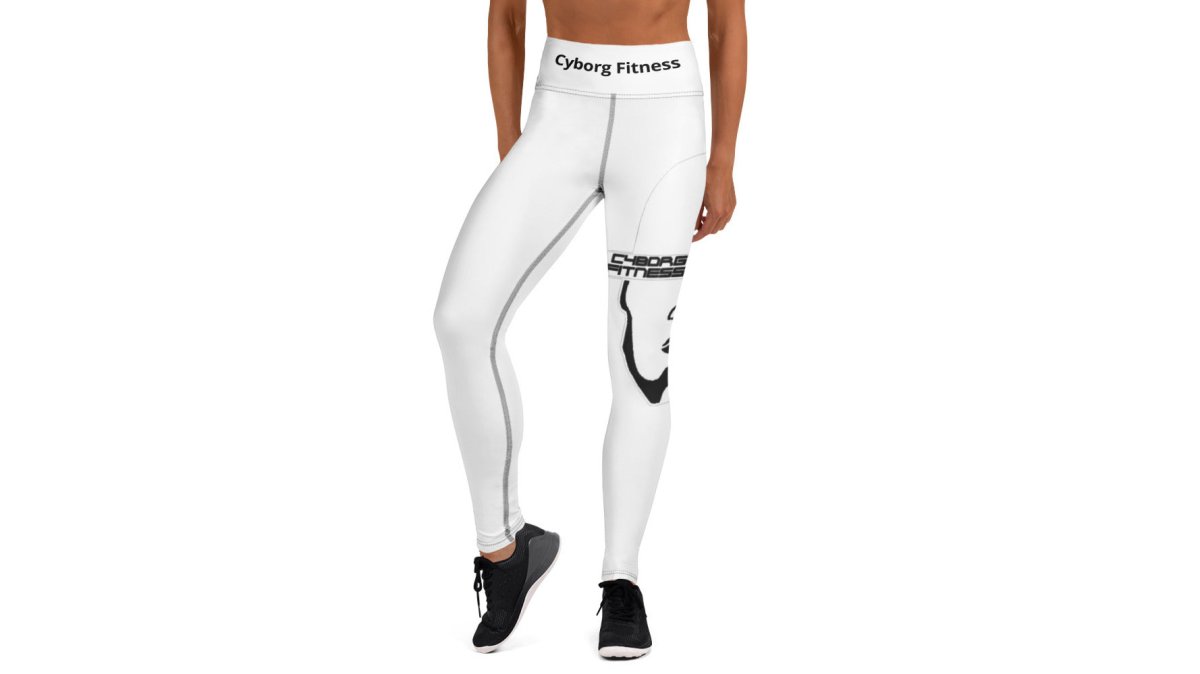
Zoom in on the product photos. Look for flatlock seams on rash guards (they reduce chafing), overlock and coverstitch on leggings (they prevent fraying), and a gusset in the crotch for freedom of movement. CYBORG WEAR's Cyber-Stitch Pocket Leggings use a triangle gusset and a high-waisted cut, details a dropshipper would never list because it doesn't control the pattern.
The Squat Test and the Transparency Check
Fabric weight and fiber composition predict performance, but you can also test directly. Two checks work on any leggings:
- The squat test. Squat in front of a mirror in good lighting. If you can see through the fabric, the weight is too low for training, the most common complaint about dropshipped leggings.
- The stretch-and-recover test. Stretch the fabric at the knee, hold five seconds, then release. A quality blend snaps back; a cheap blend stays stretched or wrinkles.
Platform-Specific Red Flags and Browser Tools for Verification
Every e-commerce platform leaves a fingerprint on the storefront. Reading those fingerprints lets you identify the platform in under a minute, then apply the checks that matter most for it.
How to Identify the Platform First
Before judging a store, figure out what it's built on. Three quick methods:
- View page source. Right-click the page and choose "View Page Source" (Ctrl+U on Windows, Cmd+Option+U on Mac). Search the code for platform signatures:
cdn.shopify.comandShopify.themepoint to Shopify;wp-contentandwoocommercepoint to WooCommerce;static.parastorage.compoints to Wix;cdn11.bigcommerce.compoints to BigCommerce. - Check the checkout URL. A store that redirects to
checkout.shopify.comor a similar hosted checkout is on that platform; one that keeps you on its own domain is self-hosted or using a custom checkout. - Use a browser extension. BuiltWith and Wappalyzer display a site's tech stack, platform, payment processor, analytics, and marketing tools, in one click, and the free tiers are enough. SimilarWeb's extension adds traffic estimates and audience geography, useful for spotting sudden, unnatural traffic patterns.
| Platform | Red Flag | What to Check |
|---|---|---|
| Shopify | Generic free theme, no custom domain, no app integrations | Look for a branded domain (not storename.myshopify.com), a customized theme, and installed apps like a reviews widget or a size-guide tool. A bare Shopify store with none of these is often a test store or a dropshipper. |
| WooCommerce | Broken checkout, expired SSL, plugin errors | Check for the padlock icon and a valid certificate. WooCommerce stores that dropship often run outdated plugins, which produce visible errors at checkout. |
| Wix / Squarespace | Template look, no product-level customization | These platforms are legitimate for small brands, but a dropshipper using them usually leaves the default template untouched and has no product photography of its own. |
| Instagram / TikTok shops | No linked website, no business address | Tap the bio link and audit the destination site. If there is no site at all, or the site has no address, treat the shop as unverified. |
| Marketplace listings (Amazon, Etsy, eBay) | Same seller operating under many brand names | Open the seller's profile and review their other listings. A seller with dozens of unrelated "brands" and no consistent product category is a reseller, not a brand. |
The Domain Age and Traffic Check
Domain age is one of the most reliable signals available. A brand with a real supply chain, real customers, and real returns usually has a domain at least a few years old; a dropshipper often launches a new domain every few months.
The Checkout and Payment Test
The checkout page is where dropshippers are most exposed. Run these checks before paying:
- Payment processor. A real brand usually accepts major credit cards through a recognized processor (Stripe, Shopify Payments, PayPal, Authorize.net). A store that only accepts PayPal Friends and Family, Zelle, or cryptocurrency is avoiding chargeback protection.
- SSL certificate. The padlock icon should appear on checkout. Click it to confirm the certificate is issued to the store's own domain, not a third-party host.
- Contact information at checkout. A real brand lists a support email or phone number; a dropshipper often lists nothing, or a generic
support@address that bounces. - Order confirmation behavior. A real brand sends a confirmation with a real order number and shipping timeline; a dropshipper often sends a vague confirmation and goes silent until the supplier ships.
Trust Signals That Separate Real Brands From Resellers
Real brands show their work: they publish fabric certifications, name suppliers, and answer questions about where products are made. Look for:
- OEKO-TEX or GRS certification on fabric
- A real return policy with a clear window and process
- Customer support you can actually reach by email or chat
- Size guides with real measurements, not generic charts
- A physical business address listed on the site
Frequently Asked Questions
How can I tell if an activewear brand is just dropshipping?
Check three things: product photos, shipping times, and contact info. Dropshipped activewear often uses generic stock photography that appears on multiple sites. Run a reverse image search to confirm. Shipping estimates longer than 10 business days from overseas suppliers signal dropshipping. Legitimate brands list a physical address and responsive customer support. If the site has no About page or only a generic email, treat it as a red flag.
Why is dropshipped activewear often lower quality?
Dropshipped activewear often lacks consistent quality. Brands that manufacture or print on demand, like CYBORG WEAR, control production specs and can verify fabric composition. The yoga leggings use 82% polyester and 18% spandex with four-way stretch.
How do I check if a clothing website is legitimate?
Run a website audit: verify the business address on Google Maps, check for a return policy with clear terms, and look for customer reviews outside the site itself. Search the brand name plus 'scam' or 'review' on Reddit and Trustpilot. Use a browser extension like Fakespot or check the domain age on ICANN Lookup. A site registered three months ago with no verifiable address and stock photos is not a legitimate activewear brand.
Are all small activewear brands dropshipping their products?
No. Many small brands use print-on-demand or cut-and-sew manufacturing, which is different from dropshipping. Print-on-demand means the brand designs the product and a manufacturer produces it per order. Dropshipping means the seller lists a generic product they never touch. Look for custom branding, original photography, and specific fabric details. CYBORG WEAR, for example, makes products on demand after printing, which reduces overproduction and gives them control over design and material specs.
The real test isn't whether a store uses a supplier. It's whether the brand controls its own product and stands behind it.
At CYBORG WEAR, every piece is made to order, from all-over print rash guards to performance-ready leggings with a raised waistband and four-way stretch. We publish our fabric blends, our certifications, and our sourcing. That's what separates a brand from a reseller.
Get started with CYBORG WEAR and shop activewear you can actually verify.